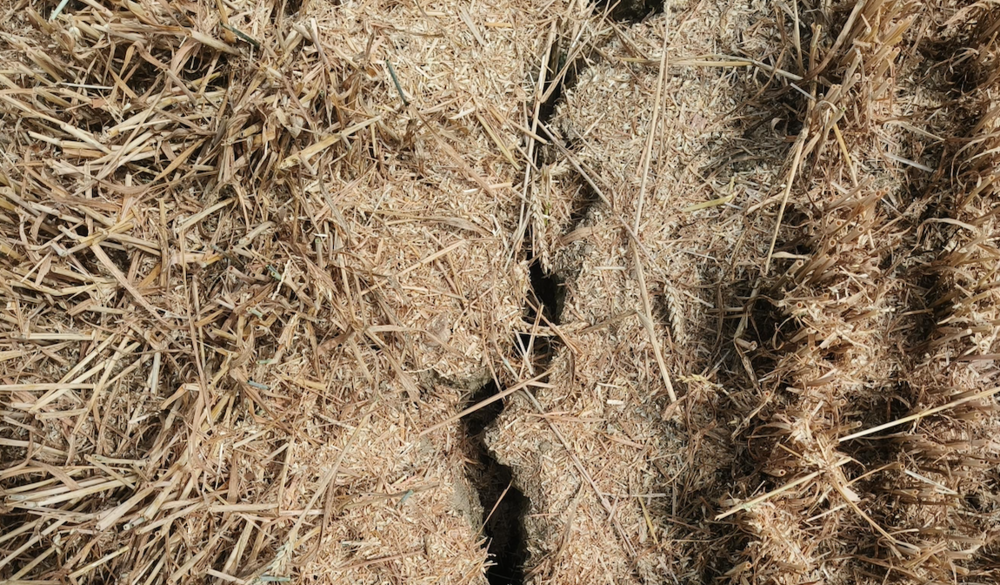
June 2026 was the hottest on record in Western Europe and the second hottest globally. Climate change is a reality that is becoming more palpable every year, with significant and sometimes disastrous consequences for the agricultural sector. Around the world, the frequency and intensity of extreme weather events are increasing. In Europe, heat waves—sometimes exceeding 40 °C—are accompanied by prolonged droughts. Elsewhere, episodes of torrential rain are causing floods and landslides. The severity of these phenomena puts a heavy strain on soils, crops, and farm animals. Regardless of continent or production system, all farmers now face the same question: how can farms be made more resilient to climate-related hazards?
Field observations, as well as a growing body of scientific research, suggest that practices developed in agroecology, organic farming, and biodynamics can help mitigate the effects of these disruptions (Altieri et al., 2015; Santoni et al., 2022; Rigolot & Quantin, 2022). What they have in common is a focus on the resilience of agroecosystems rather than on maximum short-term performance. This refers to the ability to maintain coherent functioning despite shocks, uncertainties, and climate fluctuations.
Diversifying Production Systems
The first key to this resilience lies in the diversification of agricultural systems. Combining field crops, livestock, arboriculture, vegetable farming, and semi-natural areas (hedgerows, meadows, ponds, or copses) increases beneficial interactions among the farm’s various components.
Trees provide shade for sensitive crops and livestock while limiting the drying effects of the wind. Root systems explore different depths of the soil, improving its water retention and stability. Crops, for their part, do not all react in the same way to extreme weather events; their diversity thus reduces the risk of simultaneous losses and spreads out production periods over time.
This approach aligns with the concept of the “farm organism” in biodynamics, as well as with the principles of agroforestry, permaculture, and syntropic agriculture, which seek to restore complex, self-sustaining, and resilient agricultural ecosystems (Jacobi et al., 2025).
Beyond risk reduction, diversified systems generally produce more biomass and promote carbon storage in the soil. This accumulation of organic matter gradually improves soil structure, increases its water infiltration and retention capacity, and helps maintain cooler temperatures in the surface soil layers. All of these characteristics are essential for coping with droughts and heat waves.
Humus-Rich Soils to Retain Water and Preserve Fertility
The second key to resilience lies beneath our feet. Humus plays a fundamental role in soil function, not only as a carbon reservoir but also as the architect of soil structure.
Recent work by Alessandro Piccolo shows that humified compounds bind closely with mineral particles to form particularly stable organo-mineral complexes (Piccolo & Drosos, 2025). This structure promotes the formation of erosion-resistant aggregates while creating a porous network capable of efficiently storing and redistributing water throughout the soil profile. Fertile, active humus develops most effectively in living soils—that is, soils rich in microorganisms—because it is microbial life that produces high-quality humus. It is not simply a matter of storing dead carbon in the soil, which can be counterproductive from an agronomic standpoint.
Humus thus acts as a true water regulator: it improves rainwater infiltration, reduces runoff, and increases the water reserve available to plants during dry periods. It also contributes to the physical, chemical, and biological fertility of soils. By enhancing nutrient availability, stimulating root development through hormone-like effects, and positively influencing the microbial communities in the rhizosphere, it creates conditions conducive to crop growth, even when climatic conditions become more challenging.
The use of biodynamic preparations, particularly horn manure (500 and 500P) and compost preparations (502 through 507), helps stimulate microbial activity in the soil and promote the development of soil organic matter in the form of humus. Scientific research thus aligns with the observations of farmers, for whom biodynamic practices truly help strengthen soil resilience and vitality, particularly during difficult years. Evidence supporting this is growing in France (Zappellini et al., 2022), Switzerland (Krause et al., 2022), Italy (Mazzei et al., 2024), Germany (Milke et al., 2021), in Egypt (Harm, 2025), as well as in other regions (Christel et al., 2021; Santoni et al., 2022).
Natural resistance in plants?
Developing a diverse agricultural ecosystem and fertile, humus-rich soils provides a solid foundation for improving crop resilience. A further step could be taken if the plants themselves develop a greater ability to adapt to the various stresses associated with climate change: heat, drought, salinity, or disease.
In viticulture, French researchers have shown that plants’ responses to climatic stresses and pathogen attacks differ depending on the cultivation method. Vines grown using biodynamic methods exhibited greater response plasticity than those grown using conventional agriculture (Soustre-Gacougnolle et al., 2018).
Among the factors likely to contribute to these mechanisms, horn silica (501) is currently a particularly interesting area of research. Recent studies show that it can influence the physiological activity of leaves, particularly photosynthesis and certain mechanisms involved in stress responses (Pettinelli et al., 2023). More broadly, knowledge regarding the role of silicon in plants indicates that it helps strengthen plant tissues and activate various natural defense pathways (Collins et al., 2024). Research is ongoing to better understand the specific contribution of preparation 501 to these mechanisms.
No single biodynamic preparation, on its own, constitutes a solution to the challenges posed by climate change. It is the coherence of the entire farming system that makes it possible to gradually strengthen the ability of soils and plants to cope with disturbances. However, while certain practices can help build tolerance to difficult climatic conditions, they cannot work miracles when those conditions become extreme. We must therefore consider resilience and solidarity on a larger scale.
Solutions to climate challenges must be comprehensive and take a long-term perspective (Altieri et al., 2015). They rely on agronomic practices that promote living soils, diversified production systems, and crops better able to adapt to unpredictable events. They also require collective action: farmers cannot bear the responsibility for this transition alone.
Researchers, educators, consumers, politicians, businesses, and citizens—we all have a role to play in contributing to the development of a resilient agroecology, one that will allow us to eat healthily in today’s uncertain world. These crises call on us to be closer to one another and more supportive—in other words, more human.
References
Altieri, M. A., Nicholls, C. I., Henao, A., & Lana, M. A. (2015). Agroecology and the design of climate change-resilient farming systems. Agronomy for Sustainable Development, 35, 869–890. https://doi.org/10.1007/s13593-015-0285-2
Christel, A., Maron, P.-A., & Ranjard, L. (2021). Impact of farming systems on soil ecological quality: A meta-analysis. Environmental Chemistry Letters, 19, 4603–4625. https://doi.org/10.1007/s10311-021-01302-y
Collins, C., Bloomfield, S., Hansen, L., & Gilliham, M. (2024). Can silica application enhance vine performance and quality? OENO One, 58(4). https://doi.org/10.20870/oeno-one.2024.58.4.8192
Harm, J. (2025). Egyptian Biodynamic Association — How can an economy of love, inspired by SEKEM, contribute to systemic change? In J. Kronenberg & E. T. Lammerts van Bueren (Eds.), On the Earth We Want to Live (World Sustainability Series). Springer. https://doi.org/10.1007/978-3-031-98758-8_22
Jacobi, J., Andres, C., Assaad, F., et al. (2025). Syntropic farming systems for reconciling productivity, ecosystem functions, and restoration. The Lancet Planetary Health, 9, e314–e325.
Krause, H. M., Stehle, B., Mayer, J., et al. (2022). Biological soil quality and soil organic carbon change in biodynamic, organic, and conventional farming systems after 42 years. Agronomy for Sustainable Development, 42, 117. https://doi.org/10.1007/s13593-022-00843-y
Mazzei, P., Sica, A., Migliaro, C., et al. (2024). MRI and HR-MAS NMR spectroscopy to correlate structural characteristics and the metabolome of Fiano and Pallagrello grapes with the action of field spray preparation 500 and the soil spatial microvariability. Chemical and Biological Technologies in Agriculture, 11, 131. https://doi.org/10.1186/s40538-024-00620-x
Milke, F., Rodas-Gaitan, H., Meissner, G., Masson, V., Oltmanns, M., Möller, M., Wohlfahrt, Y., Kulig, B., Acedo, A., Athmann, M., & Fritz, J. (2024). Enrichment of putative plant growth-promoting microorganisms in biodynamic compared with organic agriculture soils. ISME Communications, 4(1), ycae021. https://doi.org/10.1093/ismeco/ycae021
Pettinelli, S., Buzzi, L., Ceccantoni, B., et al. (2023). Does biodynamic preparation 501 influence the physiological activity of grape leaves of the Cesanese d’Affile cultivar? Chemical and Biological Technologies in Agriculture, 10, 114. https://doi.org/10.1186/s40538-023-00492-7
Piccolo, A., & Drosos, M. (2025). The essential role of humified organic matter in preserving soil health. Chemical and Biological Technologies in Agriculture, 12, 21. https://doi.org/10.1186/s40538-025-00730-0
Rigolot, C., & Quantin, M. (2022). Biodynamic farming as a resource for sustainability transformations: Potential and challenges. Agricultural Systems, 200, 103424. https://doi.org/10.1016/j.agsy.2022.103424
Santoni, M., Ferretti, L., Migliorini, P., Vazzana, C., & Pacini, G. C. (2022). A review of scientific research on biodynamic agriculture. Organic Agriculture, 12, 373–396. https://doi.org/10.1007/s13165-022-00394-2
Soustre-Gacougnolle, I., Lollier, M., Schmitt, C., et al. (2018). Responses to climatic and pathogen threats differ in biodynamic and conventional vines. Scientific Reports, 8, 16857. https://doi.org/10.1038/s41598-018-35305-7
Zappellini, C., Dequiedt, S., Tripied, J., Horrigue, W., Barré, P., Masson, V., Madouas, M., Mathé, A., Gervais, J.-P., Terrat, S., Maron, P.-A., & Ranjard, L. (2025). Ecological impact of conventional, organic, and biodynamic viticultural systems and associated practices on soil microbiota in different French regions. Agriculture, Ecosystems & Environment, 392, 109748. https://doi.org/10.1016/j.agee.2025.109748