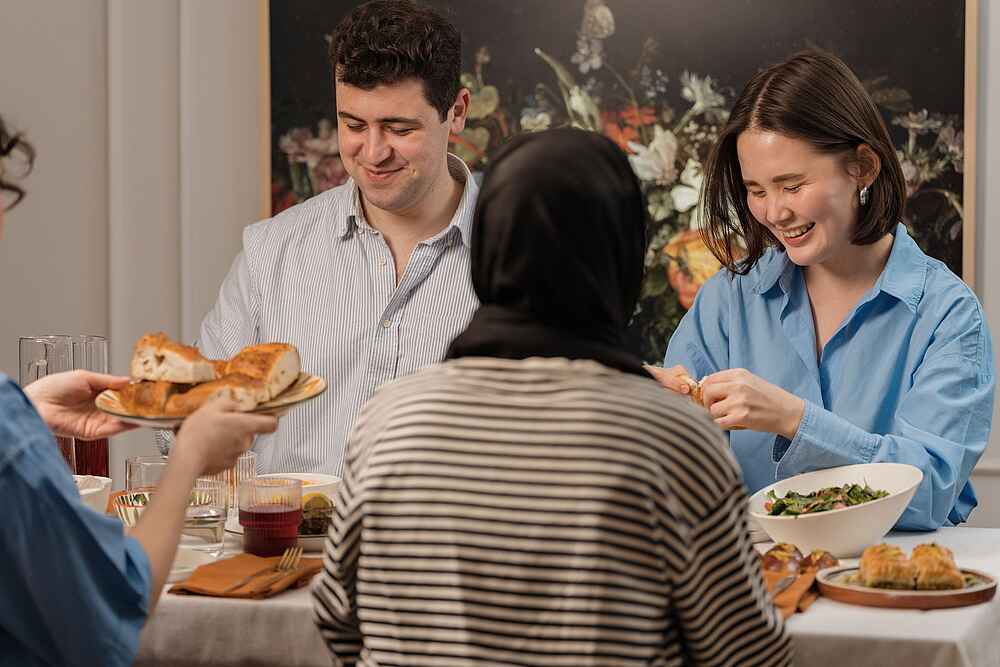
Diet is fundamental to health. It forms the basis for gut health and, consequently, for the microbiome. Often, the focus when it comes to diet is on what we eat – that is, which foods, of what quality and in what quantities, are included in our diet. However, what happens before and after eating is just as crucial: the mindset with which we begin to eat and what we do after the meal.
Digestion begins even before the first bite. The mere scent of freshly baked bread, the sight of an appetising meal or even the gong calling us to lunch stimulate digestion. Saliva and digestive enzymes are produced in greater quantities, and intestinal motility also increases. The reason for this is the close connection between the brain and the gut. A constant exchange takes place via the nervous system, hormones, immune signals, microbial metabolites and the vagus nerve [1].
The state we are in when we start eating is crucial for healthy digestion. If, for example, we bring stress and restlessness to the table, the gut picks up on these signals and processes the meal less effectively. Tension, time pressure and sensory overload lead to shallower breathing, and the muscles remain tense. The body is in ‘active’ or even ‘fight-or-flight’ mode. In this state, the focus is on alertness and energy production, whilst activities such as digestion take a back seat. If, on the other hand, there is calm and a pleasant atmosphere, digestion is given the space and time it needs. Chewing thoroughly supports this process and enhances the perception of flavour. The same meal can feel different on different days – sometimes easy to digest, sometimes difficult. It is not the food that has changed, but the inner state in which we eat [2, 3, 4].
The situation is similar after a meal. Ideally, during this phase, the body is in rest and digestion mode, controlled by the parasympathetic nervous system. Glucose enters the bloodstream, insulin facilitates its uptake into the body’s cells, the stomach continues to break down the food, and the intestines coordinate its passage through the digestive tract. At the same time, the body directs increased blood flow to the digestive organs. However, this state is disrupted if, immediately after eating, we plunge back into the hustle and bustle of everyday life, replying to emails, making phone calls or rushing from appointment to appointment. The body then switches to sympathetic mode and focuses its attention on performance and alertness. Digestion takes a back seat. Colloquially, the saying ‘the food is sitting heavily on my stomach’ describes this sensation very aptly.
When digestion doesn’t feel right, most people ask themselves: What should I cut out? Which diet should I start? Less gluten, fewer dairy products, cutting down on sugar or avoiding highly processed foods? Sometimes that makes sense. But it’s worth asking first: In what state of mind am I eating? And what happens after the meal?
If we regularly eat under time pressure, our bodies associate meals with stress. If, on the other hand, we cultivate calm and pleasant rituals, our bodies associate eating with security and relaxation. The more familiar and predictable the routine, the more secure our bodies feel. This also includes the atmosphere and the company in which we eat, as well as the table setting and the way the food is presented.
Often, even small changes are enough: sitting down mindfully, putting your smartphone aside, taking a few conscious breaths before eating, spending the first minute in silence – perhaps with a prayer or a word of thanks. A simple exercise can also be helpful in practising mindful eating, by asking ourselves three questions at every meal [5]:
- Before eating: What’s on my plate?
- Whilst eating: How does it taste?
- After eating: How am I digesting and tolerating what I’ve eaten?
It only takes a few minutes, but doing this regularly can significantly strengthen our awareness of our own body and, consequently, our relationship with ourselves, whilst also having a positive impact on our eating habits. This helps to establish habits that foster a healthy approach to food.
A short walk or some other form of exercise after a meal is also helpful. Researchers have found that just ten minutes’ walking can reduce the rise in blood glucose by up to 30 per cent [6,7,8]. On the one hand, the working leg muscles absorb glucose directly from the blood – wholly without any additional insulin. This results in a smaller rise in blood sugar after a meal. On the other hand, maintaining an upright posture aids gastric emptying, allowing digestion to continue more smoothly. This is not about athletic performance or exertion, but about a gentle transition back into daily life. This allows the body to continue the digestive process undisturbed. However, this requires that the meal itself has taken place whilst we were as relaxed as possible. If we sit down to eat feeling tense or mentally rushed, a walk afterwards can only compensate for this to a limited extent.
The gut processes not only the food but also the inner state of mind that we bring to the table. Good digestion therefore depends not only on what is on our plate, but also, and above all, on what precedes and follows our meals.
It is worth considering a new form of food culture. Food culture begins with the quality of the food and encompasses both our eating habits and the way the table is laid and the dining room is arranged. The company with whom we share the meal also plays a role. Food culture promotes health; indeed, it is the very foundation of gut health. The microbiome reacts equally to what we eat and to how we eat.
References
[1] Bonaz B, Bazin T, Pellissier S. (2018): ‘The Vagus Nerve at the Interface of the Microbiota-Gut-Brain Axis’. Frontiers in Neuroscience, 12:49. https://pmc.ncbi.nlm.nih.gov/articles/PMC5808284/
[2] Browning KN, Travagli RA. (2019): ‘Central control of gastrointestinal motility’. Current Opinion in Endocrinology, Diabetes and Obesity, 26(1):11–16. https://pmc.ncbi.nlm.nih.gov/articles/PMC6512320/
[3] Karl JP, Hatch AM, Arcidiacono SM, Pearce SC, Pantoja-Feliciano IG, Doherty LA, Soares JW. (2018): ‘Effects of Psychological, Environmental and Physical Stressors on the Gut Microbiota’. Frontiers in Microbiology. https://pmc.ncbi.nlm.nih.gov/articles/PMC6143810/
[4] Kelly JR, Kennedy PJ, Cryan JF, Dinan TG, Clarke G, Hyland NP. (2015): ‘Breaking down the barriers: the gut microbiome, intestinal permeability and stress-related psychiatric disorders’. Frontiers in Cellular Neuroscience. https://pubmed.ncbi.nlm.nih.gov/26528128/
[5] Peschke J (2021): Vom Acker auf den Teller. Was Lebensmittel wirklich gesund macht. AT Verlag, 1st ed.
[6] Engeroff T, Groneberg DA, Wilke J (2023): ‘After Dinner Rest a While, After Supper Walk a Mile? A Systematic Review with Meta-analysis on the Acute Postprandial Glycaemic Response to Exercise Before and After Meal Ingestion in Healthy Subjects and Patients with Impaired Glucose Tolerance’. Sports Medicine. https://pubmed.ncbi.nlm.nih.gov/36715875/
[7] Breit S, Kupferberg A, Rogler G, Hasler G (2018): ‘The Vagus Nerve as a Modulator of the Brain–Gut Axis in Psychiatric and Inflammatory Disorders’. Frontiers in Psychiatry. https://pmc.ncbi.nlm.nih.gov/articles/PMC5859128/
[8] Amaya F (2026): ‘The 10 minutes after you eat decide how you digest’. Biome Health. https://thebiomehealth.beehiiv.com/p/the-10-minutes-after-you-eat-decide-how-you-digest accessed 3 July 2026