• News
  • Eventos
    • Eventos
    • Ofertas en línea
    • Congreso de Agricultura
    • Goetheanum.tv
    •  
    • Eventos pasados
    •  
    • Eventos Externos
  • Áreas de trabajo
    • Departamento de Alimentación
    • Asesoría
    • Formación
    • Investigación
    • Sustainable Development
    • Agroforestry
    • Consejo de Economía
    • Preparados
    • Living Farms
    • Semillas
    • Animal husbandry
    • Curso de Agricultura
    • Tema del año
    • Grupos profesionales
    • Viticultura Biodinámica
    • Producción de frutas
    • Hierbas y Plantas Medicinales
    • Proyecto Paisaje
    • Abejas
    • Cultivo del olivo
  • Publicaciones
    • Libros
    • Podcast
    • Magazine
    • Documentación de las jornadas
    • Reporte de Actividades
    • Circular
    • Más información
    • Agricultura biodinámica
  • ¿Quiénes somos?
    • Contacto
    • Team
    • Visión y Misión
    • Partners / Networks
    • Más información en
    • Prensa / Comunicados de prensa
    • The Glashaus (Glasshouse)
    • Newsletter
    • Apoyar a la Sección
  • Buscar en
  • DE EN FR ES

Búsqueda de texto completo

 
Research Frontpage Study Reports Projects Basics Research Conference BDRC
  1. Sección de Agricultura
  2. Áreas de trabajo
  3. Investigación

Histamine in wine? New solutions for safe biodynamic wine enjoyment

Creado por Lukas Maschek | 06.08.2024 |   Research

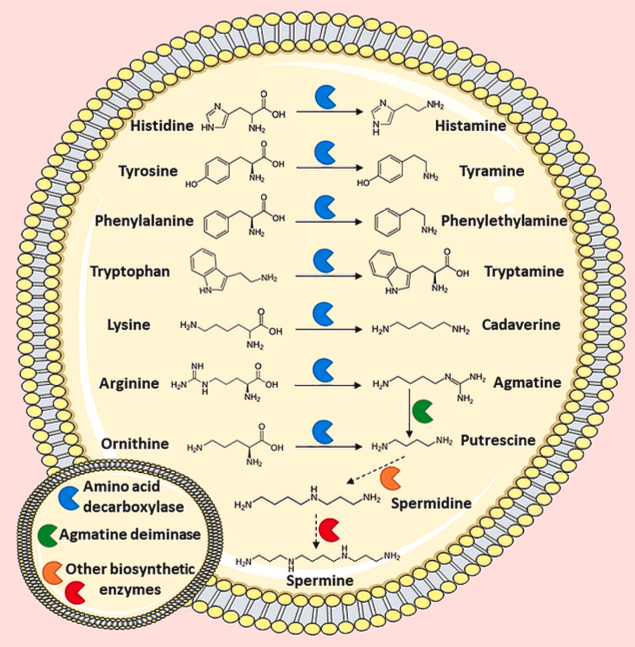
A recent study by Moreira et al. investigates biogenic amines in wine. In addition to their formation and the microbial processes involved, the study also sheds light on the importance of controlling biogenic amines for food safety and presents various microbiological strategies to improve the quality and safety of wines. The key points of the study and its relevance for biodynamic agriculture are summarised below:

  • Biogenic amines are organic compounds produced by microorganisms or enzymes in fermented foods.
  • Different biogenic amines can occur in wine. Two of the most important are histamine and tyramine, as these can pose health risks in high concentrations. They are produced during the fermentation process by the activity of yeasts and lactic acid bacteria.
  • The formation and concentration of biogenic amines is among other things influenced by the quality of the raw materials, the composition of the microbial community (especially lactic acid bacteria) and the use of additives and preservatives.
  • Histamine production can be reduced by adding commercial starter cultures that are unable to produce histamine. In addition, other microorganisms are being researched that can prevent the formation of biogenic amines or even break them down. Once fermentation is complete, extracts or enzymes can be added to the wine to further reduce the concentration of biogenic amines.
  • The European Food Safety Authority (EFSA) categorises histamine and tyramine as particularly relevant biogenic amines for food safety. Some European countries have set limits for histamine, but no such limits have yet been set for other substances - including tyramine.

Particularly interesting points from the perspective of biodynamic agriculture:

  • In biodynamics, many common additives that can help control the proliferation of microorganisms are not permitted.
  • The study investigates alternative methods and microorganisms to control biogenic amines. This provides biodynamic winegrowers with new tools to ensure the safety of their wines without compromising their quality.
  • The use of natural enzymes that break down biogenic amines is another option that harmonises with biodynamic principles.
  • Safe and natural solutions for the reduction of biogenic amines in biodynamic wines strengthens consumer acceptance and confidence in biodynamic wines.

Sources and further links to this article

  • Original study: Moreira, L., Milheiro, J., Filipe-Ribeiro, L., Cosme, F., Nunes, F. M. Exploring factors influencing the levels of biogenic amines in wine and microbiological strategies for controlling their occurrence in winemaking. Food Reseach International 190 (2024), https://doi.org/10.1016/j.foodres.2024.114558
Volver

Sección de Agricultura

Goetheanum
Hügelweg 59
4143 Dornach/Suiza
+41 61 706 42 12
agriculturenoSpam@goetheanum.ch

Goetheanum

  • Goetheanum

Eventos

  • Eventos
  • Ofertas en línea
  • Congreso de Agricultura
  • Goetheanum.tv
  • Eventos pasados
  • Eventos Externos

News

  • News

Publicaciones

  • Libros
  • Podcast
  • Magazine
  • Documentación de las jornadas
  • Reporte de Actividades
  • Circular
  • Agricultura biodinámica

¿Quiénes somos?

  • Contacto
  • Team
  • Visión y Misión
  • Partners / Networks
  • Prensa / Comunicados de prensa
  • The Glashaus (Glasshouse)
  • Newsletter
  • Apoyar a la Sección

Áreas de trabajo

  • Departamento de Alimentación
  • Asesoría
  • Formación
  • Investigación
  • Sustainable Development
  • Agroforestry
  • Consejo de Economía
  • Preparados
  • Living Farms
  • Semillas
  • Animal husbandry
  • Curso de Agricultura
  • Tema del año
  • Viticultura Biodinámica
  • Producción de frutas
  • Hierbas y Plantas Medicinales
  • Proyecto Paisaje
  • Abejas
  • Cultivo del olivo

© Copyright 2026 Sociedad Antroposófica General. Todos los derechos reservados.

Huella

Huella

Allgemeine Anthroposophische Gesellschaft

Rüttiweg 45
4143 Dornach/Schweiz
Tel. +41 61 706 42 42
Fax +41 61 706 43 14
sekretariatnoSpam@goetheanum.ch
UID: CHE-103.601.774

Webmaster
webmasternoSpam@goetheanum.ch

Concepción, diseño e implementación técnica así como soporte y hosting
PIXELPETER GmbH
Rüttiweg 56
4143 Dornach/Schweiz
www.pixelpeter.ch