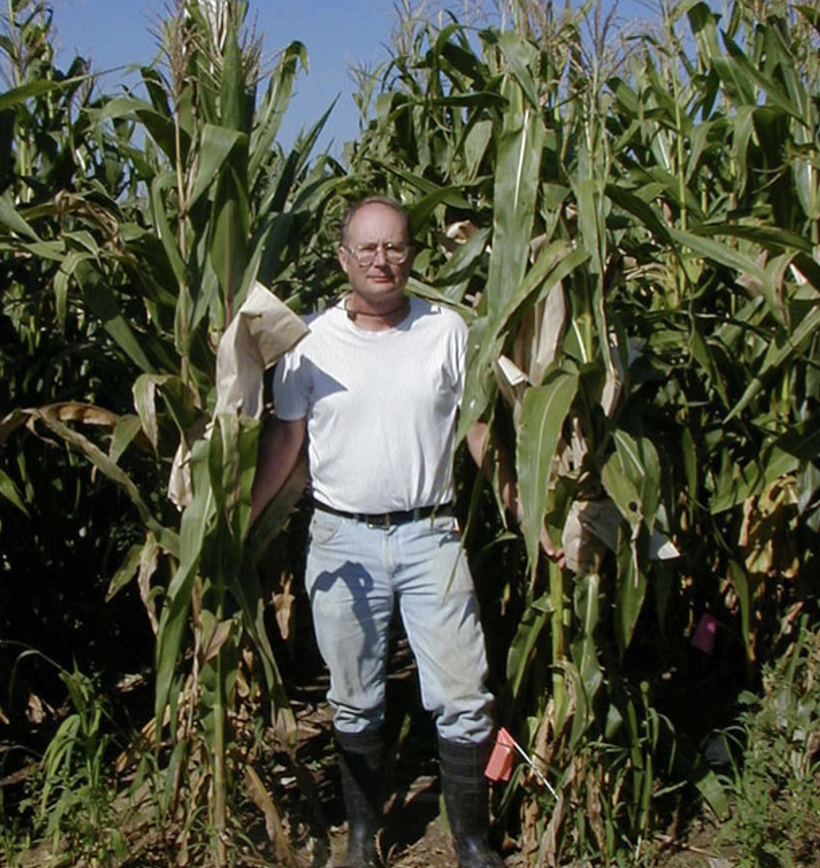
A research project by Walter Goldstein and his team at the Mandaamin Institute in Wisconsin, USA, shows that maize is much more than just a high-yield grain. Under biodynamic conditions, maize plants develop that are not only more nutritious, but also work together with bacterial communities, bind nitrogen from the air and genetically renew themselves. These dynamic holobionts could drastically reduce the use of fertilisers and pesticides – and fundamentally change agriculture.
From sacred plant to corporate grain
Corn, the sacred plant of the indigenous peoples of America, has conquered the world thanks to its enormous adaptability and productivity: today it is the most widely grown grain on earth. In modern agriculture, maize is increasingly coming under the control of a few powerful corporations that are optimising it for industrial cultivation and genetically modifying it. The result: on the one hand, yields are increasing, especially with dense planting and intensive use of fertilisers and pesticides. On the other hand, quality is deteriorating – protein and mineral content is declining, panicles are becoming smaller, pollen production is decreasing, plants appear uniform and are losing flavour. In addition, the risk of transgenic contamination, soil erosion and environmental pollution increases, while agriculture and national economies become increasingly dependent on maize.
There is a tension between the mindset of indigenous peoples and industrial agriculture, which is reflected in maize. Traditional varieties impress with their exceptional properties: they are rich in nutrients, can flexibly adapt their genome thanks to ‘jumping genes’ (transposons), and form close partnerships with microorganisms. Conventional lines, on the other hand, are highly productive, stable varieties that grow reliably under optimal conditions.
Combining the best
Our approach was to combine the best of both perspectives. This combination of tradition and innovation results in maize that is not only high-yielding, but also adaptable, nutrient-rich and ecologically valuable.
We selected maize under biodynamic conditions for biodynamic and organic farms and observed the plants closely. The research was conducted primarily at the Mandaamin Institute in Wisconsin and on several organic and Demeter farms in collaboration with James White's team at Rutgers University, agricultural universities in Illinois, Iowa, Wisconsin and Puerto Rico, and several companies.
After 14 years of research with open populations, breeding shifted to inbred lines, hybrids and improved synthetic populations – mostly crosses between traditional landraces and conventional lines. The aim was to develop plants that are robust, high-yielding and adaptable.
Surprising results: more minerals and microbes
One of the first spectacular results of the breeding programme was the mass occurrence of soft-kernel seeds. These mutants are not only easier to process, they also contain significantly higher amounts of essential amino acids such as methionine, lysine and cysteine, as well as more minerals. Organic poultry farmers could thus dispense with synthetic methionine and at the same time reduce their use of soya by around 9 per cent.
In addition, the most efficient inbred lines and hybrids were densely colonised with bacteria – from the seeds to the roots to the leaves, chloroplasts, pollen, stigmas and embryos. These microbes generate dynamic movements in the cell plasma and produce nitrate, ammonium and nitric oxide, while the plant responds with its own defence substances. They are not only passed on via the seeds, but are actively absorbed via the root system, multiplied in root hairs and stored in special cells. The partnership between plants and bacteria is reminiscent of Rudolf Steiner's concept of ‘living nitrogen’.
The inbred lines showed significantly higher vitality and stress tolerance than conventional lines, very dark green, chlorophyll-rich leaves, better mineral uptake and greater competitiveness against weeds. Isotope studies suggest that some lines bind significant amounts of nitrogen from the air with the help of their bacteria.
It was particularly noteworthy that large, soft seeds occurred exclusively under biodynamic conditions. Initial tests with biodynamic herb seed baths indicate that these enhance microbial colonisation of the plants and further promote growth. The intense bacterial presence could also increase the plants' ability to generate genetic variation by activating ‘jumping genes’. True clonal stability of the inbred lines was difficult to achieve – an exciting but challenging aspect for official variety approval.
Revolutionary research potential – biodynamic holobionts
The results open up a completely new field of research: holobiome breeding, which takes into account the interactions between the plant, the microbiome and soil life. This approach could help solve climate, environmental and health problems in agriculture, reduce fertiliser requirements, control weeds naturally and, at the same time, produce more valuable products. If taken seriously, this vision has the potential to fundamentally change biodynamic, organic and even industrial agriculture.
Dr Walter Goldstein, MSc and PhD in agronomy, worked at the Michael Fields Agricultural Institute for 25 years and founded the Mandaamin Institute in the USA in 2011. He has been growing biodynamic maize since 1989.
Article in the latest issue of our magazine Living Farms