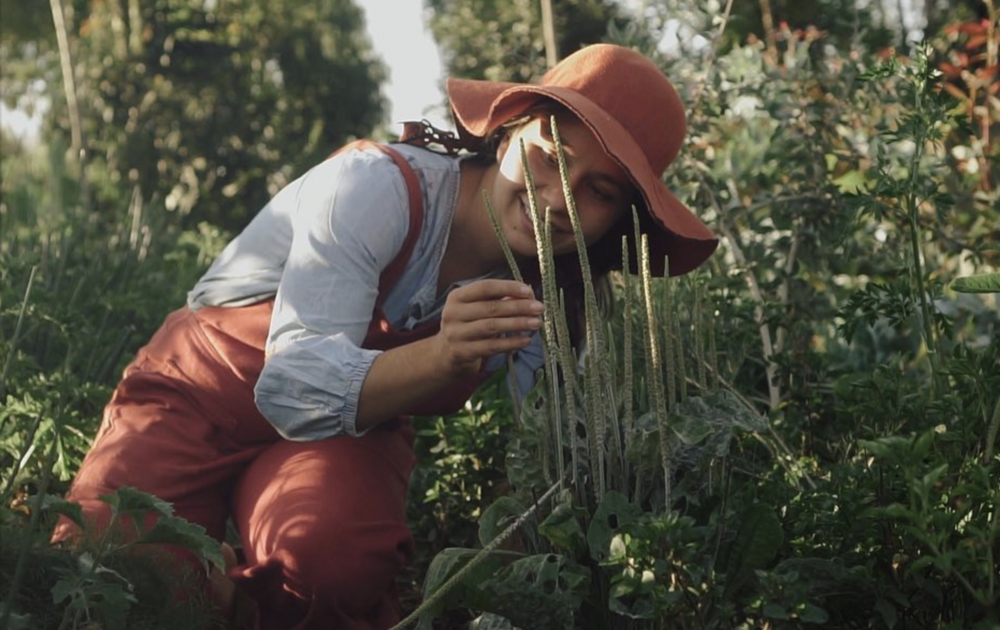
With the new third season of our podcast Living Farms, we are dedicating ourselves to holistic agroecology and inviting guests from biodynamics and other holistic farming approaches. At a time when agricultural systems around the world are under enormous pressure, we want to broaden the perspective—beyond individual methods toward a shared understanding of agriculture as a living, sustainable process.
Why holistic agroecology?
As representatives of biodynamic agriculture, we are increasingly experiencing how important exchange with other holistic approaches has become. Movements such as regenerative agriculture, organic farming, permaculture, and syntropic agriculture may differ in language, practice, and philosophical background—but they share fundamental goals.
At the core, we are all concerned with restoring living soils, fostering biodiversity, strengthening resilience, and producing food in a way that respects and enhances natural cycles. In the face of a globally dominant agricultural model often shaped by extractive, chemical-intensive, and reductionist thinking, we see in these shared intentions a powerful foundation for collaboration.
This new Living Farms season is intended as an invitation to dialogue. We want to build bridges between different perspectives and practices—not to dissolve differences, but to make them fruitful. Because it is precisely through exchange that innovation emerges: through collaborative research, practical experimentation, interdisciplinary cooperation, and a stronger collective voice for a future-oriented agriculture.
Ultimately, this is about more than methods. It is about the transformation of our food system—and about how we as a society can enter into a regenerative relationship with the Earth.
Syntropic agriculture – in harmony with nature
The opening of the season offers an in-depth exploration of syntropic agriculture—an approach that exemplifies how farming can be designed as a regenerative process. Syntropic agriculture does not primarily see itself as a production system, but as an active co-creation of ecosystems. Its goal is to regenerate degraded landscapes while creating productive, diverse, and stable systems.
A central principle is the understanding of natural succession—that is, the natural development of ecosystems over time. In syntropic systems, these processes are intentionally supported and accelerated. By combining different plant species in multiple layers, complex agroforestry systems emerge that are modeled on natural forests. They use light, space, and nutrients efficiently and develop increasing fertility over time.
Another key lies in the management of biomass. Through targeted pruning and the retention of organic material within the system, soil fertility is continuously built up. Instead of depleting resources, cycles are created that nourish themselves and increase in productivity over the long term.
The role of medicinal plants is also particularly compelling. In syntropic systems, they fulfill important functions: they promote soil life, stabilize ecological processes, and contribute to the regeneration of degraded land. Plants are thus not only seen as a yield factor, but as active co-creators of a living system.
Beyond practical methods, syntropic agriculture is grounded in a mindset shaped by observation, cooperation, and deep respect for natural processes. It is less about control and more about conscious participation—with the aim of creating so-called “systems of abundance” in which growth and regeneration go hand in hand.
First episode of the new season with Natalia Muguet
In the first episode, we speak with Brazilian agronomist Natalia Muguet, who works at the intersection of ecology and tropical agroforestry. She takes us along her personal journey—from a conventional form of agriculture strongly focused on yield and control to a regenerative approach based on observation, diversity, and collaboration with nature.
Together, we dive into the principles of syntropic agriculture: multi-layered planting systems that mimic natural forests, targeted biomass management, the enhancement of soil fertility, and the development of resilient ecosystems. A special focus is placed on the role of medicinal plants—both for ecological processes and for human health.
The conversation not only opens up a practical perspective, but also conveys a deeper understanding of agriculture as a cultural and ecological practice. It invites us to question existing paradigms and to think in new ways—from extraction toward regeneration and abundance.
The episodes of the new season will be released monthly and invite listeners to collectively advance a form of agriculture that fosters life—in all its forms.
Online session for exchange on the podcast episode about syntropic agriculture
We would like to connect our podcast with you and your agricultural experience! In an exchange session on 11 May 2026 at 13:30 (CET), we will explore together how and where the syntropic approach can be relevant for biodynamic farming. What are the potential benefits of this, for example, for the cultivation of medicinal plants?
You are warmly invited to connect in advance via the new platform “Biodynamic Network” to exchange ideas and share relevant readings. Please also post your questions and/or challenges in this field there, so that we can address key topics in a focused way.
Biodynamic Network: https://community.sektion-landwirtschaft.org/index.php?r=user%2Fregistration%2Fby-link&token=haf7ZB0p17ghqx&spaceId=16
Meeting Link: kmeet.infomaniak.com/jat2ui0y7vhbvlwmhkoyexap
Code: 5505622124