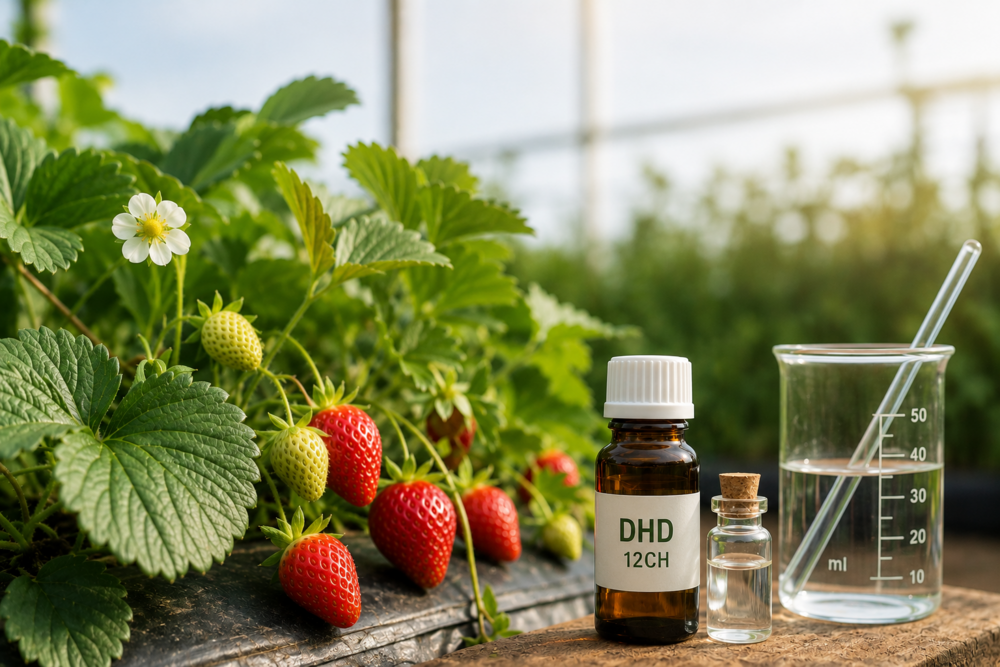
What are dynamised high dilutions?
DHDs are preparations made through a process of repeated dilution and vigorous shaking, known as dynamisation or potentisation. This method originates from homeopathy, where similar preparations have been used for more than two centuries.
Unlike conventional agricultural products, DHDs are not intended to provide nutrients or directly kill pests and diseases. Instead, proponents believe they act as biostimulants, helping plants activate their own natural capacities for growth, adaptation and self-regulation.
A different way of thinking about plant health
Most agricultural inputs are designed to control a specific problem: a disease, a pest or a nutrient deficiency. DHDs are based on a different philosophy. Rather than attacking the problem directly, they aim to support the organism's overall vitality and balance.
This perspective is sometimes described as salutogenic, meaning that it focuses on the origins of health rather than the causes of disease. In practical terms, the goal is to strengthen the plant so that it can better cope with environmental stresses, pathogens and changing growing conditions.
This way of thinking is familiar to many biodynamic farmers. Biodynamics also seeks to work with the farm as a living organism and to stimulate natural self-regulating processes rather than relying primarily on external interventions.
What has research found?
Although research in this field remains limited, several studies have reported promising results.
Scientists have observed a range of effects, including improved seed germination, stronger seedling development, increased photosynthetic activity, enhanced root and shoot growth, better recovery after pruning, activation of natural plant defence mechanisms, and, in some field trials, a reduction in disease severity.
For example, studies on beans, peas, broccoli, rice and yerba mate have shown improvements in growth or resilience following treatment with certain DHD preparations. Other experiments have reported increased production of enzymes and compounds involved in plant defence, suggesting that the preparations may stimulate the plant's own immune responses.
One of the practical advantages often highlighted is that DHDs are used in extremely small quantities and leave virtually no chemical residues, making them compatible with organic and biodynamic farming systems.
Why are DHDs controversial?
Despite these encouraging findings, DHDs remain highly controversial within the scientific community.
The main challenge is that many preparations are diluted far beyond the point where any molecules of the original substance are expected to remain. According to conventional chemistry, it is difficult to explain how such solutions could produce biological effects.
Because of this, critics often suggest that any observed effects may be due to chance, experimental bias or placebo effects. However, supporters point out that positive results have also been observed in plant and animal experiments, where placebo explanations are less convincing.
The scientific debate therefore focuses less on whether some effects have been reported and more on how such effects could occur.
Possible explanations under investigation
Several hypotheses have been proposed. Some researchers suggest that the dynamisation process may create nanostructures or nano-sized particles that retain characteristics of the original substance. Others propose that water may be capable of storing and transmitting structural or electromagnetic information generated during the preparation process.
Studies using spectroscopy, crystallography and biophysical methods have reported measurable differences between different high dilutions. Researchers have also explored concepts from systems theory, complexity science and quantum biology to understand how living organisms might respond to extremely subtle signals.
At present, however, no single explanation has gained broad scientific acceptance. The mechanisms remain an active area of research and debate.
Strawberry experiment
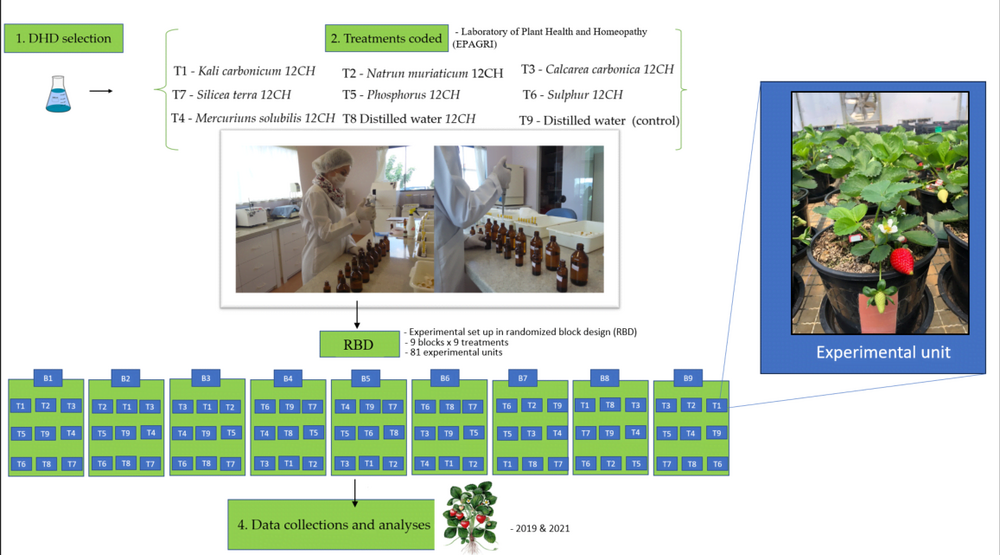
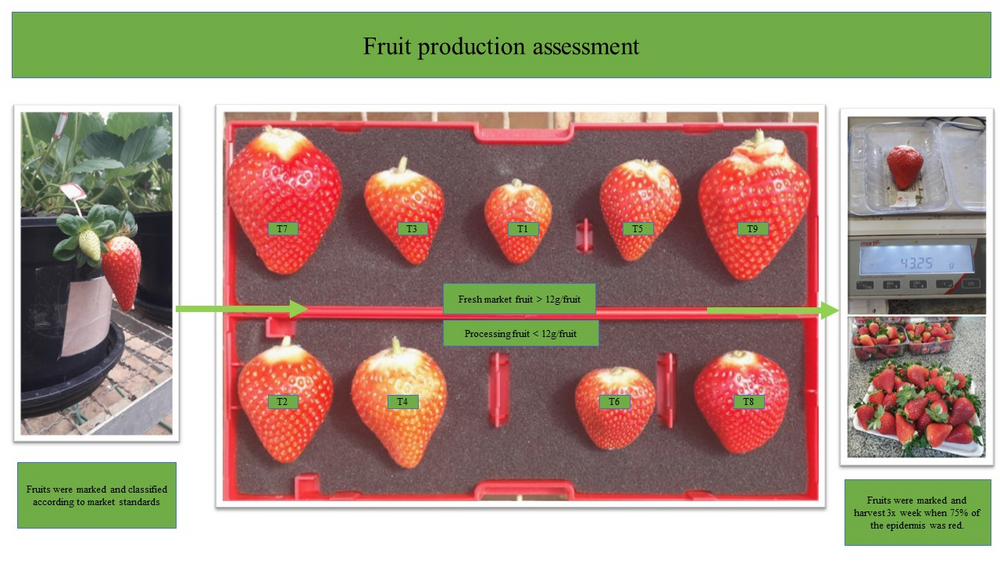
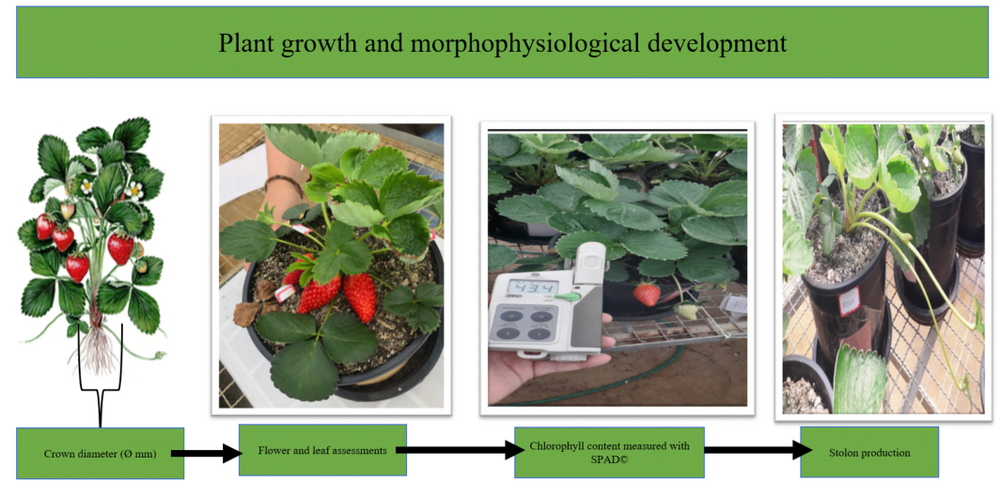
The review was accompanied by a double-blind greenhouse experiment conducted in Brazil in 2019 and repeated in 2021 on strawberry plants. The researchers tested several mineral-based DHDs, including sulphur, phosphorus, kali carbonicum, calcarea carbonica and silicea terra, all prepared at the 12CH potency. Across the two trials, treatments based on sulphur, phosphorus and kali carbonicum were associated with increased plant growth, higher yields and lower incidence of leaf spot disease, while silicea terra and calcarea carbonica promoted root development. Although the authors emphasize that further field research is needed to confirm these findings under diverse farming conditions, the results suggest that DHDs may offer a promising biostimulant approach for agroecological strawberry production and warrant further investigation.
Reference
Original study: Faedo, L., Matias, C., Verdi, R., Wright, J., Rayns, F., Kretzschmar, A., & Boff, P. (2024). The use of mineral dynamised high dilutions for natural plant biostimulation; effects on plant growth, crop production, fruit quality, pest and disease incidence in agroecological strawberry cultivation. Biological Agriculture & Horticulture, 40(4), 267–287. https://doi.org/10.1080/01448765.2024.2396894
The study is covered by Creative Commons CC-BY (http://creativecommons.org/licenses/by/4.0/) and has been summarized for this study report.