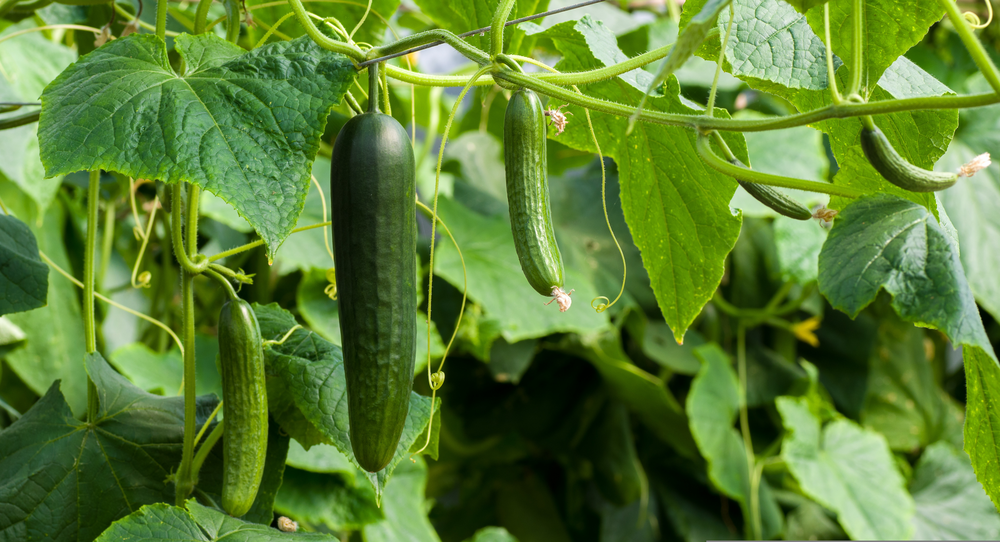
How does the cultivation system influence the vitality and shelf life of our food? Jens-Otto Andersen, Marjolein Doesburg-van Kleffens, Jürgen Fritz and Carsten Gründemann found answers to this question by conducting a stress storage test on cucumbers. In their study, published in 2025, they compared conventionally, organically and biodynamically grown cucumbers. The result: the biodynamic samples achieved particularly good results in the stress test. Anna Storchenegger spoke with Marjolein Doesburg-van Kleffens and Carsten Gründemann.
A. Storchenegger: Compared to organic and conventional cucumbers, biodynamic cucumbers performed best in terms of three parameters: antimicrobial properties, colour behaviour and healing of cut surfaces. How clear-cut is this result?
C. Gründemann: We examined almost 900 cucumbers – a large sample size. The difference between conventional cucumbers and the two organic varieties was statistically significant. However, there were differences within the groups. Theoretically, this could be related to the microbiome, but it is very complex to work that out.
M. Doesburg-van Kleffens: We saw a clear trend in favour of biodynamic cucumbers, but not every single one was automatically better. Factors such as soil, weather, farm management, seed quality, transport and storage play a major role.
The stress test is suitable for plants from the Cucurbitaceae family – cucumbers, courgettes, certain pumpkins, and presumably also watermelons.
Do biodynamic cucumbers have a better microbiome and therefore stronger defences?
M. Doesburg-van Kleffens: We have not proven this directly; that would require a separate microbiological study. Our investigations are primarily phenomenological: we observe the better properties and interpret them. It is conceivable that greater microbial diversity or certain beneficial bacteria that enrich the microbiome and make it more diverse are promoted by biodynamic methods. Conventional cultivation with pesticides, on the other hand, can strongly select and reduce microbes, thus weakening the microbiome.
Can we conclude from your results that eating biodynamic cucumbers has a positive effect on health?
M. Doesburg-van Kleffens: We cannot make any direct statements about this. Clinical studies would be needed to prove this, which is a different field of research. In theory, foods with higher vitality or a more diverse microbiome could be better utilised by the body.
C. Gründemann: It has long been my wish to combine medicine and agriculture, as I see great therapeutic potential in working with the earth. The cucumber project provided an ideal opportunity to pursue this interest and to explore how different cultivation methods can affect the vitality of our food — and, potentially, our health.
Are you planning further projects to demonstrate the vitality of food?
M. Doesburg-van Kleffens: Together with Paul Doesburg, we are currently developing a portable crystallisation chamber – a ‘miniature laboratory’ for copper chloride crystallisation. This will allow researchers to see for themselves which crystal patterns are produced by different cultivation methods.
C. Gründemann: This method shows a different form of expression of vitality than the cucumber stress test that was carried out. Until now, the image-creating crystallisation method has only been possible at great expense in terms of infrastructure and money. We want to change this and offer a practical, scientifically sound solution.
What advice would you like to give our readers, i.e. farmers and consumers?
C. Gründemann: Anything that damages the soil and microbes reduces the vitality of the earth and plants in the long term – and thus also our own vitality. There are technical tricks for extending shelf life, but regional, seasonal production is best: not everything has to be available all year round.
M. Doesburg-van Kleffens: I think it's important to change our mindset: to understand what cultivation and nutrition mean. If consumers pay more attention to origin, season and cultivation methods, quality and shelf life will automatically come to the fore.
Stress storage test
For the study, 865 cucumbers from conventional, organic and biodynamic cultivation were sliced, then reassembled and packed in airtight cling film. After two weeks of storage at 23.5°C, the previously defined vitality parameters were examined.
There were clear differences between the three cultivation methods. The regeneration of the cut surfaces was particularly remarkable; in the case of biodynamic cucumbers in particular, these grew back together firmly.
One possible explanation for this is the higher concentrations of secondary plant substances in organically and biodynamically grown cucumbers. These substances strengthen the plants' stress resistance and support the healing processes of the cut surfaces.
Marjolein Doesburg-van Kleffens is a research assistant in the field of translational complementary medicine at the University of Basel.
Carsten Gründemann is professor of translational complementary medicine at the University of Basel.