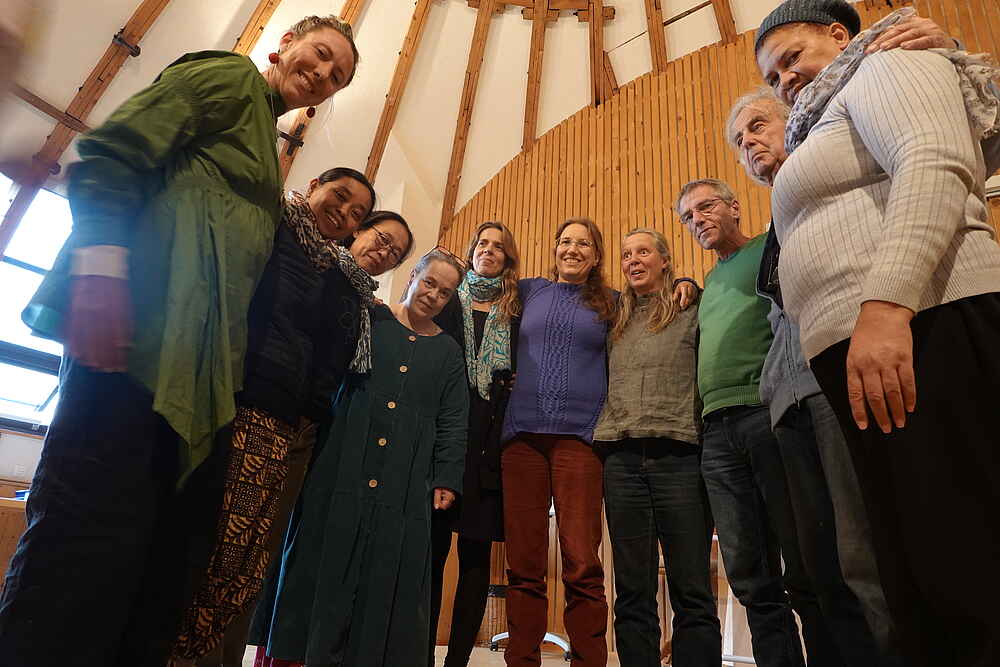
The course has been successfully completed in March 2026. Following a general online announcement in June 2025 which attracted over 50 interested participants from around the world, a registration and selection process has been conducted. As a result, 23 participants have been admitted, from which four dropped out during the course for various reasons. The course was offered by Biodynamic Federation-Demeter International and the Section for Agriculture and has been developed and taught by Dr. Ambra Sedlmayr.
12 online sessions on the course content and a final unit (either participation in the live finale in Dornach or in two online sessions) have been carried out. Additionally, three group coaching sessions were offered. The video recordings were made available in the course library along with the materials.
The feedback indicated that there were various reasons for participating. Among others, a desire to learn more about adult education and to understand learning processes and thereby to make courses more engaging, appealing, and effective. Participants were highly motivated and engaged and therefor the results and learnings were significant and different changes of perspectives could be achieved. For example:
- Implementation of 7-fold learning process: Moving from "delivering content" to facilitating a process; participants learned how to inspire insights and support the self-discovery journey of the student.
- Experiential Learning: Participants learned how to create learning experiences and allowing their students to find their own answers through phenomenological inquiry.
- Student-centred approach: Focusing on the students' journey, their specific needs, and existing experiences.
The feedback was overall very positive, and a high level of general gratitude has been expressed. Expectations were met to a very high degree and participants appreciated the teacher's professionalism, communication and dedication. The "live" finale meeting was essential for many participants to understand the entire ‘arch’ of adult learning better and dive deeper. Now the participants are very eager to put what they have learned into practice.
Participants even development more skills to solve some pressing problems. These came out in the discussions and exchange:
→ greater self-confidence and a new sense of identity as adult educators;
→ The perspectives and skills to engage, motivate, and involve their participants, and to make them responsible for their own learning;
→ An understanding of how people naturally learn and how to apply this knowledge to course development;
→ The willingness to shift from largely ineffective content- and teacher-centered teaching to participant- and learning-centered facilitation of learning processes.
→ Enthusiasm for their role as biodynamic trainers;
You can find a more detailed report here: Download report
We believe that this course, through its positive impact on biodynamic trainers, provides an essential impulse for the renewal of the biodynamic movement worldwide. With a human-centred approach like this, more and more people gain skills to “awaken” a desire for biodynamics in others, including both farmers and consumers.