Many paths lead to sustainable agriculture. Biodynamics describes one of them, but how does it deal with modern technologies? What are these technologies? How can they be integrated into everyday farming, and what hurdles need to be overcome? Aglaia Liopa-Tsakalidi addresses this question in her current study on retro-innovation. She identifies obstacles to acceptance and implementation as well as opportunities to meet the challenges of the future.
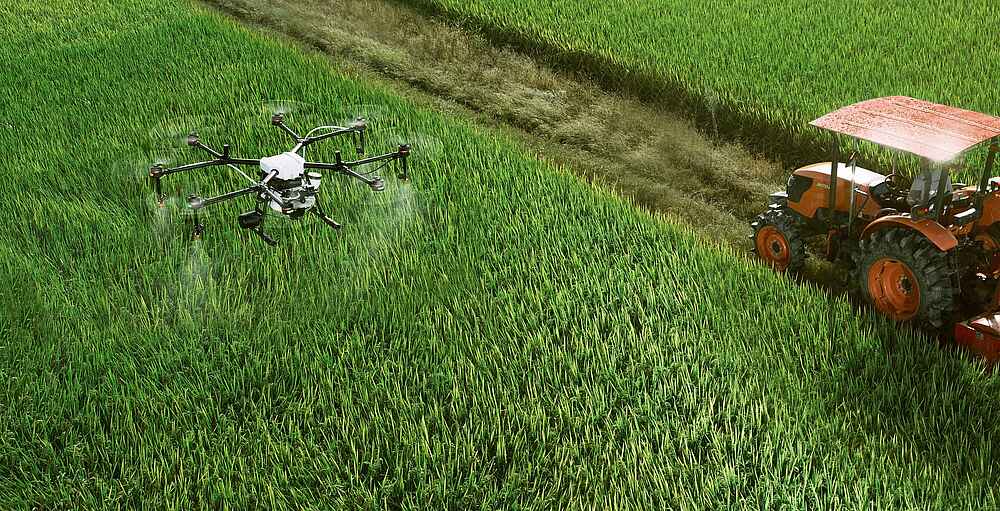
This study deals with retro-innovation. But what exactly is it? The text defines retro-innovation as “active consideration of a time in the past, which provides inspiration for alternative solutions to contemporary problems". It is therefore a kind of retrospective that provides a new view of current challenges. In this way, traditional biodynamic practices meet modern technologies such as IoT sensors (IoT: Internet of Things) and drones, as well as the implementation of blockchain and artificial intelligence in everyday farming.
Combining traditional knowledge with technological innovation creates potential for sustainable and resilient agricultural systems. However, this combination also brings challenges to light, such as cultural resistance, philosophical conflicts or trade-offs with regard to agricultural infrastructure. Successful implementation requires cooperation between different disciplines, new training and further education, as well as political and technical support.
In addition to a literature review, the study includes several case studies. One of these deals with SEKEM in Egypt. In this “experimental chamber”, new methods and technologies can be tested and implemented step by step. However, as the use of modern technologies is often associated with higher costs, individual site clarifications are essential. This is all the more important in view of current challenges such as man-made climate change and the increasing scarcity of resources in many areas of the world.
In her conclusion, Liopa-Tsakalidi advocates introducing new technologies gradually. For example, inexpensive IoT sensors can measure various soil parameters in the field in real time. Field inspections can be supplemented by drone recordings. Artificial intelligence can gradually be incorporated into decision-making processes. Such simple, affordable and scalable developments help farmers to work more efficiently and in a more modern way without losing sight of the roots of biodynamics and the ideals of regenerative agriculture.
Commentary
When viewed from the outside, biodynamic agriculture often appears more traditional than modern, and sometimes almost backward. But appearances are deceptive. Old ideals do not exclude modern methods. It is now up to biodynamic farmers to take a neutral look at the current technical possibilities and consider whether and which of them can be incorporated into their own farm. This active exchange between innovation and tradition can help to find a path to a modern, agriculturally sustainable future without losing sight of traditional roots.
Sources and further links to this article
- Original study:
Liopa-Tsakalidi, Aglaia. Retro-Innovation in Biodynamic Agriculture: Bridging traditional wisdom and smart technologies for sustainable farming. International Journal of Agriculture and Environmental Research. 11. 200-210. 2025.
http://dx.doi.org/10.51193/IJAER.2025.11113 - The study is covered by Creative Commons (link to license) and has been summarized for this study report.