A new nutrition trend is spreading on social media: "Fibremaxxing". This means taking in as much fibre as possible every day. The promise ranges from better digestion through a longer feeling of satiety to a healthier intestinal flora.
The indigestible plant-based food components, i.e. dietary fibre, are among the essential components of a healthy diet. They are known in particular for their supportive effect on intestinal activity. It is now known that they also have a variety of effects in the human body, depending on their type and properties. Insoluble fibre is found in whole grain products and vegetables, among other things. In particular, it contributes to stool volume and regulated intestinal activity. Soluble fibre, which is found in oatmeal, apples and legumes, for example, can have a beneficial effect on blood sugar and cholesterol levels or slow down gastric emptying [1]. This is also one reason why dietary fibre can increase satiety. In addition, it has an effect on the release of appetite-regulating intestinal hormones (for example, GLP-1 and PYY). These mechanisms can support satiety and the regulation of food intake [2].
Some dietary fibre is metabolised in the large intestine by the microorganisms living there. It is the food for the intestinal bacteria, so to speak. Among other things, short-chain fatty acids such as acetate, propionate and butyrate are produced. These play a central role in the gut-brain axis, thus influencing communication between the gut and the brain and can regulate inflammatory processes and immune reactions. As a result, they can also have an impact on mood and cognitive function [1].
The health significance of dietary fibre has been investigated in numerous scientific studies. A comprehensive review by Reynolds and Kolleg evaluated the results of 185 prospective and 58 clinical studies. It was shown that a higher fibre intake was associated with a lower risk of cardiovascular disease, type 2 diabetes and bowel cancer as well as with a lower overall mortality. There were also beneficial effects with regard to body weight and cholesterol levels. Particularly clear correlations were found with a daily fibre intake of about 25 to 29 grams [3].
The fact that a high-fibre diet is by no means new is shown by traditional dietary patterns from different regions of the world. Mediterranean cuisine or a varied, plant-based diet, as it is common in various regions of Asia, illustrate how a varied selection of plant-based foods has long been part of a health-promoting diet. It also remains questionable how much fibre is really needed. The German Nutrition Society recommends that adults consume at least 30g of fibre daily [5]. The European Food Safety Authority (EFSA) considers 25g daily to be sufficient for normal bowel function [6]. These values are guidelines and not quantities that must be exceeded to the greatest possible extent [1, 2]. However, the average daily fibre intake in European countries is below the recommended amounts. A comparative review reports an average intake of 18–24g per day for adult men and 16–20g per day for women [7]. In contrast, "fibremaxxing" often increases the daily fibre intake to 50 to 70g per day or even more.
Despite the health benefits, it cannot be concluded that there is an additional benefit for every arbitrary increase in fibre intake or every type of fibre [8]. A very high fibre intake can also have drawbacks. Especially when the change is made quickly, flatulence, bloating and abdominal pain can occur up to and including a change in bowel habits. Not drinking enough can mean that certain types of fibre are also more likely to promote constipation [9].
At first glance, "fibremaxxing" supports a healthy diet. But is it sufficient to focus on the highest possible intake of a single food component?
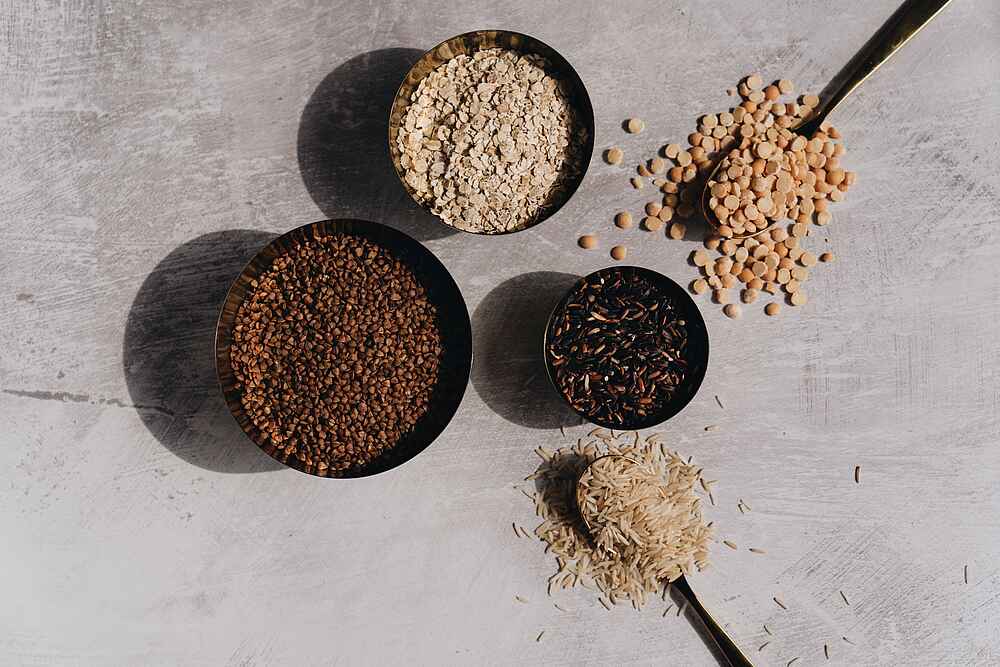
If we look at the substance side alone, 50g of oatmeal contains starch, fat, protein and minerals in addition to 5.5g of fibre. Hundred grams of cooked lentils with 4.3g of fibre additionally provide the organism with vegetable protein, while nuts and seeds also provide valuable fatty acids and minerals [4]. Whole grains have an ideal composition in this respect, as they contain carbohydrates, fat, protein and some vitamins and minerals. It is therefore not only the fibre content that makes a food valuable from a substance point of view, but the interaction of its components. A food cannot be reduced to a single nutrient. Nor can the quality of a meal be judged solely by how many grams of fibre it contains. The quality of the food, taste, scent, consistency, preparation and atmosphere at the meal also play a part. A meal that is freshly prepared and contains different plant-based ingredients can combine enjoyment and variety without having to count every nutrient.
"Fibremaxxing" picks up on a dietary recommendation and packages it in a modern social media trend. While nutrition trends are often transient and frequently go hand in hand with the commercialisation of functional foods such as powders or shakes, real added value lies in a balanced diet. It is varied, healthy and, above all, can be implemented permanently, i.e. it is a long-term solution. Ultimately, the decisive factor is not to consume the highest possible amounts of a single nutrient, but to find a diet with high-quality foods that is stimulating and combines health, sustainability, variety and enjoyment.
Bibliography
[1] La Torre D, Verbeke K, Dalile B. (2021): "Dietary fibre and the gut–brain axis: microbiota-dependent and independent mechanisms of action". Gut Microbiome, 2. doi:10.1017/gmb.2021.3.
[2] Salleh SN, Fairus AAH, Zahary MN, Bhaskar Raj N, Mhd Jalil AM. (2019): "Unravelling the Effects of Soluble Dietary Fibre Supplementation on Energy Intake and Perceived Satiety in Healthy Adults: Evidence from Systematic Review and Meta-Analysis of Randomised-Controlled Trials". Foods, 8(1):15. doi:10.3390/foods8010015.
[3] Reynolds A, Mann J, Cummings J, Winter N, Mete E, te Morenga L. (2019): "Carbohydrate quality and human health: a series of systematic reviews and meta-analyses". The Lancet, 393(10170):434–445. doi:10.1016/S0140-6736(18)31809-9.
[4] Max Rubner Institute. (2025): "Bundeslebensmittelschlüssel (BLS), Version 4.0 – German Nutrient Database". Karlsruhe. doi:10.25826/Data20251217-134202-0.
[5] German Society for Nutrition (DGE). (2021): "Ballaststoffe". DGE reference values. Available online at: https://www.dge.de/wissenschaft/referenzwerte/ballaststoffe (accessed on 20.10.2026).
[6] EFSA Panel on Dietetic Products, Nutrition, and Allergies (NDA). (2010): "Scientific Opinion on Dietary Reference Values for carbohydrates and dietary fibre". EFSA Journal, 8(3):1462. doi:10.2903/j.efsa.2010.1462.
[7] Stephen AM, Champ MM-J, Cloran SJ, Fleith M, van Lieshout L, Mejborn H, Burley VJ. (2017): "Dietary fibre in Europe: current state of knowledge on definitions, sources, recommendations, intakes and relationships to health". Nutrition Research Reviews, 30(2):149–190. doi:10.1017/S095442241700004X.
[8] Yao F, Ma J, Cui Y, Huang C, Lu R, Hu F, Zhu X, Qin P. (2023): "Dietary intake of total vegetable, fruit, cereal, soluble and insoluble fiber and risk of all-cause, cardiovascular, and cancer mortality: systematic review and dose–response meta-analysis of prospective cohort studies". Frontiers in Nutrition, 10:1153165. doi:10.3389/fnut.2023.1153165.
[9] Mysonhimer AR, Holscher HD. (2022): "Gastrointestinal Effects and Tolerance of Nondigestible Carbohydrate Consumption". Advances in Nutrition, 13(6):2237–2276. doi:10.1093/advances/nmac094.