However, whilst scientific studies on the effects of biodynamic viticulture already exist, the results remain controversial due to their limited number, prompting researchers to conduct further studies to gain a clearer understanding and consolidate the data.
In the study presented here, Manuela Brando de Lachapelle and her colleagues from the OENOLOGY Research Unit at Bordeaux University spent three years investigating the effects of biodynamic practices on the structure and composition of grape skins. Why did they specifically choose to study the skins in this experiment? The tissues of the skins contain the majority of the aromatic and phenolic compounds of interest to winegrowers, as these are what contribute to the wine’s colour, aromatic complexity and tannic structure. The skins of the berries also act as a protective barrier against physical and biological stresses from the environment, notably UV radiation and heat, as well as diseases such as grey mould (Botrytis cinerea). As the grapes grow and ripen, the skins degrade until they reach a delicate balance between hardness, elasticity and porosity, thereby allowing the berries to expand whilst ensuring protection against external stresses. This degradation also promotes the extraction of phenolic and aromatic compounds during winemaking. Various molecular and cellular parameters come into play here, which will be assessed within this robust experimental framework.
Study overview
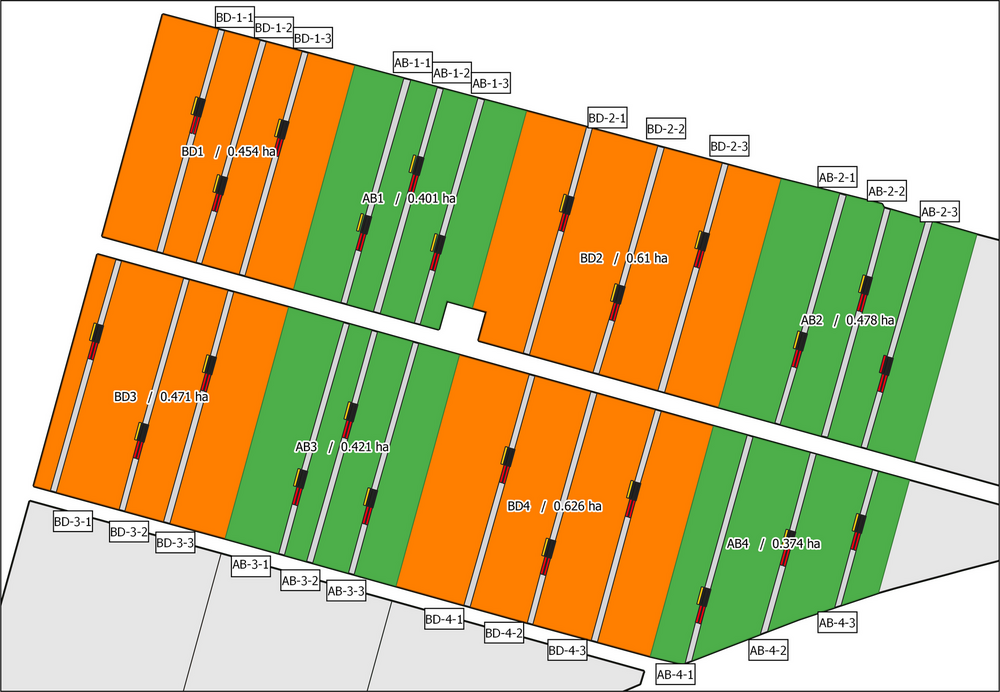
The study was conducted on the vineyards of Château Lafite Rothschild, in Pauillac in south-western France. The trial plot (3.5 ha of Cabernet Sauvignon) was divided into eight blocks, four of which were treated with the biodynamic preparations 500 (horn manure), 501 (horn silica) and CPP (Cow Pat Pit), whilst four served as ‘organic farming’ controls (AB). This trial was conducted over three years during the 2022, 2023 and 2024 vintages (see Fig. 1).
Highly varied vintages
Agriculture is characterised by a heavy reliance on weather fluctuations, and the 2022 to 2024 vintages showed significant deviations in temperature and rainfall from seasonal norms. In Pauillac, 2022 was generally hot and dry, with good harvesting conditions and little disease pressure. 2023 and 2024 were more mixed, particularly in spring, with significant temperature variations and regular rainfall – conditions more conducive to the development of vine diseases.
Berry development shaped by biodynamics
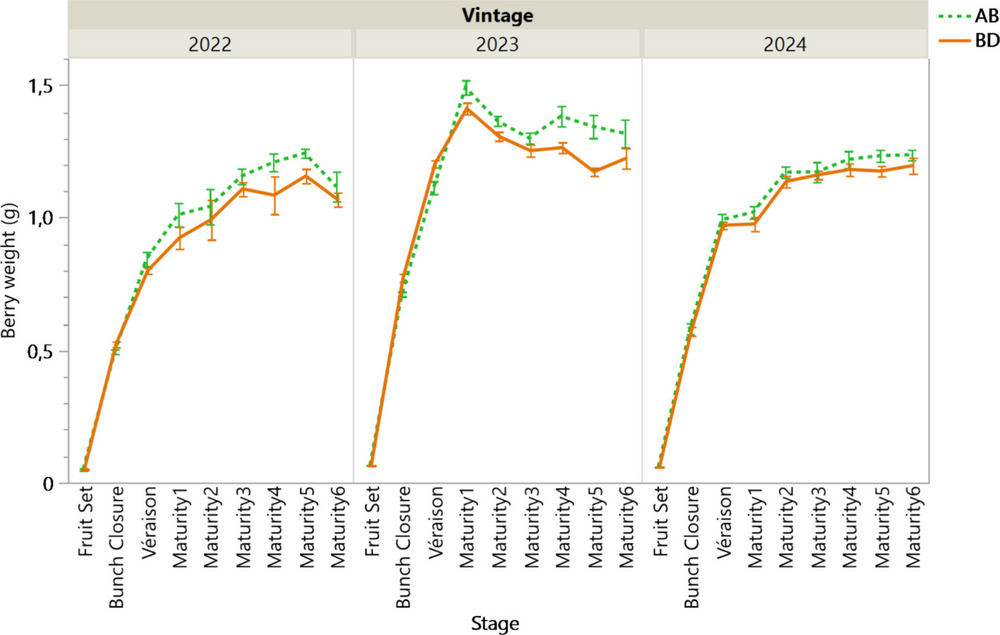
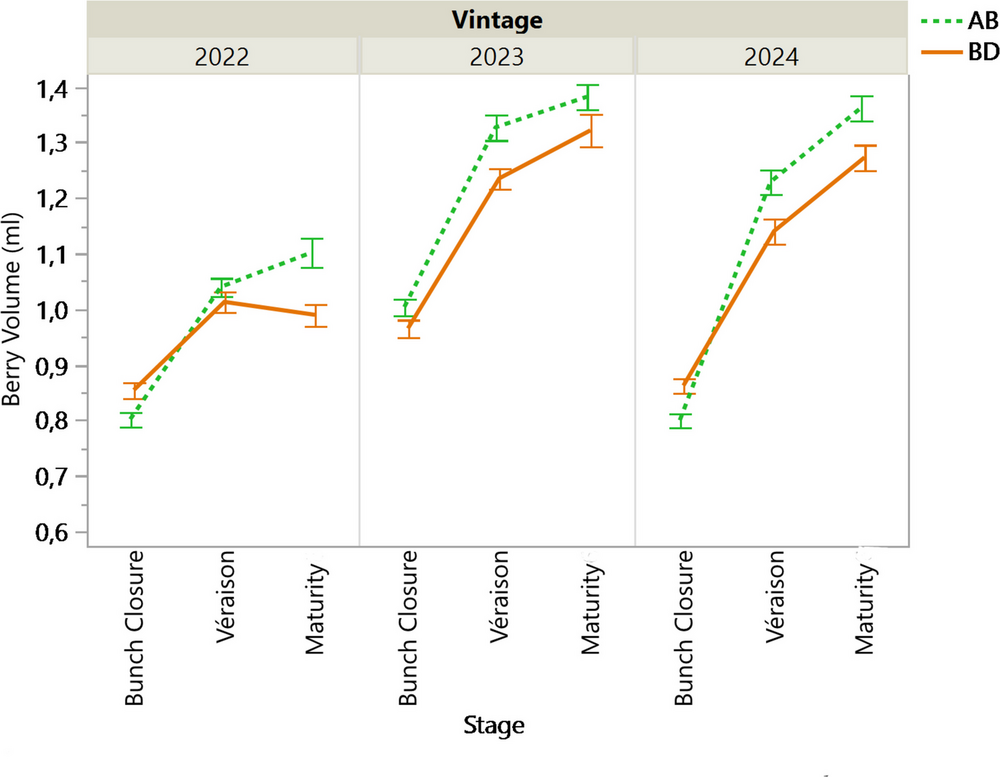
Over the course of the three vintages, the growth dynamics, berry size and final grape yield were significantly influenced by the application of biodynamic preparations. From the veraison stage (the start of grape ripening) onwards, the application of the preparations consistently regulated the growth and expansion of the berries, resulting in lighter and smaller grapes (see Figs. 2 and 3). Harvest yields were therefore slightly lower.
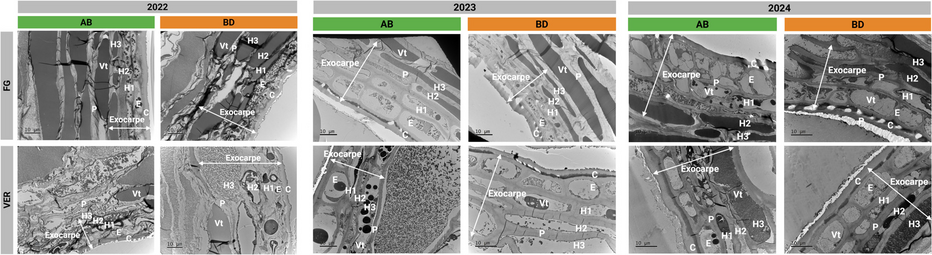
However, the researchers did not stop at these measurements. Microscopic observations were carried out to understand how the tissues of the grape skins are structured and evolve during ripening. The results show that the skins of grapes from biodynamic plots have thicker cell layers and wider cell walls (see Fig. 4).
In order to understand these differences in skin structure, the researchers monitored the activity of several enzymes involved in skin degradation. The observations show that, with biodynamic treatments, one of the enzymes responsible for the shrinkage and degradation of the cell walls is less active, thereby contributing to the cohesion and resistance of the tissues. Furthermore, molecules involved in plant defence mechanisms, such as polyphenols, are also more abundant in the skins of the grapes grown here using biodynamic methods. Overall, biodynamic preparations appear to promote a more sustained maintenance of the structural integrity of the grapes during ripening, which has implications for the potential development of diseases.
Lower susceptibility to grey mould
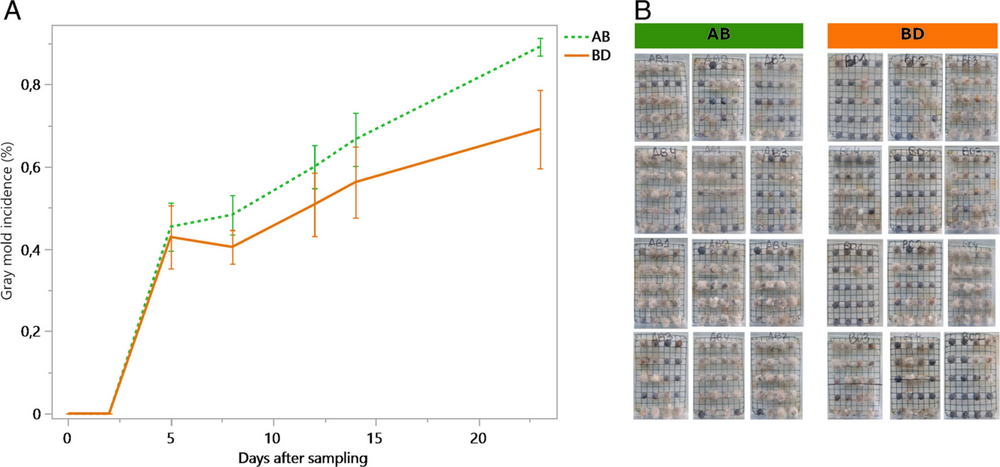
Weather conditions during the three-year trial period were not conducive to the development of grey mould in the plots. The researchers therefore carried out in vitro tests to measure the grapes’ susceptibility to this pathogen in the laboratory. To do this, 240 intact berries from each treatment were placed in plastic boxes, then subjected to conditions of heat and humidity conducive to the development of Botrytis cinerea. Here too, the results speak for themselves. After 23 days, only 69% of the grapes grown using biodynamic methods had deteriorated as a result of grey mould, compared with 89% in the control group (see Fig. 5).
Conclusion
The results of this study support the empirical observations of winegrowers, who believe that biodynamic preparations strengthen the cell walls of plants and thus improve their resistance to disease. The skins of grapes treated with the preparations are thicker and degrade more slowly, and contain higher concentrations of polyphenols – molecules involved in plants’ natural defences. The grapes are consequently less susceptible to diseases such as grey mould. The hypothesis put forward by the researchers is that biodynamic preparations, particularly horn silica (501), act as an elicitor of the plants’ defence mechanisms.
It is important to note that this study was conducted in the specific context of Château Lafite Rothschild, where the protocol for applying biodynamic preparations was more intensive than that recommended by Demeter. Horn manure (500) and manure compost (CPP) were applied twice before the start of the growing season, then once after harvest. An additional application of 500 was carried out during the summer. Horn silica (501) was applied five times during the growing season, and once after harvest.
In conclusion, the authors emphasise the importance of considering the complexity of the biodynamic method through a holistic and transdisciplinary approach. The analytical approach of this trial addresses only part of the phenomena at work in nature, and more comprehensive studies will still be required to assess the effects of biodynamic agriculture from a broader perspective.
Source
Brando de Lachapelle, M., Ishizaki, Y., Lacampagne, S. et al. Effects of biodynamic preparations on grape skin structure and composition. Org. Agr. 16, 44 (2026). https://doi.org/10.1007/s13165-026-00574-4
Licence & rights
The original article and the illustrations are published under a Creative Commons Attribution – Non-Commercial – No Derivatives 4.0 International licence, which permits any use, sharing, distribution and reproduction for non-commercial purposes, in any medium and in any format. To view a copy of this licence, please visit http://creativecommons.org/licenses/by-nc-nd/4.0/.