Wine is a matter of taste. But can taste and quality be measured? And which would you trust more: a chemical analysis or a human being?
Imaging techniques bring wine quality to light
Creado por Lukas Maschek | | Sektion für Landwirtschaft

What it's all about
In a 2020 study, a team led by Jürgen Fritz investigated the quality of wines from biodynamic, organic, and integrated cultivation. Typically, sampling is followed by chemical analysis and descriptive sensory analysis (tasting). What is special about this study, however, is the use of several imaging techniques to gain a broader perspective and better grasp the concept of “quality.”
Imaging techniques as advanced analysis tools
Consumers are increasingly interested in the conditions under which their wine was produced. As a result, organic and biodynamic viticulture has grown significantly in Europe in recent years. In contrast to tastings, however, chemical analyses often showed no clear differences between cultivation systems. Therefore, three imaging methods were additionally used in this study, which were evaluated and statistically analyzed by trained personnel.
- Copper chloride crystallization: A solution of copper chloride and wine crystallizes on a glass plate and forms structured patterns that allow conclusions to be drawn about the quality of the wine.
- Capillary dynamolysis: Wine samples rise in several phases with metal salt solutions in filter paper and produce dynamic flow patterns that reveal stages of development and aging.
- Circular chromatography: Wine is applied to treated circular filter paper, resulting in the formation of colored rings and patterns that provide clues about the composition of the sample.
Initial results
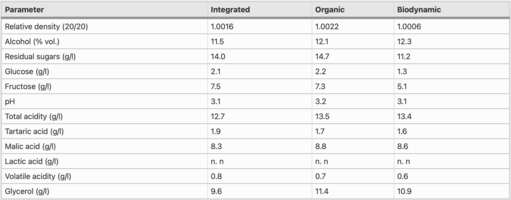
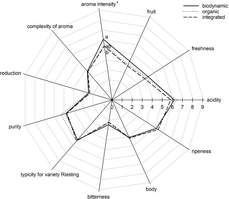
Chemical analysis shows, among other things, that the biodynamic wines sampled have a higher alcohol content and less sugar (glucose/fructose) than the samples from organic and integrated cultivation. Sensory analysis, in turn, indicates a higher intensity of flavor in biodynamic wines.
Biodynamic wine ages more slowly
However, the results of copper chloride crystallization are particularly interesting. The crystallization images were stored at 20°C for 114 days and photographed at various intervals. Although the samples were mixed, they could be easily assigned to the corresponding cultivation systems based on the structures that formed. Result:
- Biodynamic wine shows a clear structural character and few signs of aging
- Wine from integrated cultivation shows the clearest signs of degeneration
- Organically produced wines are in the middle range
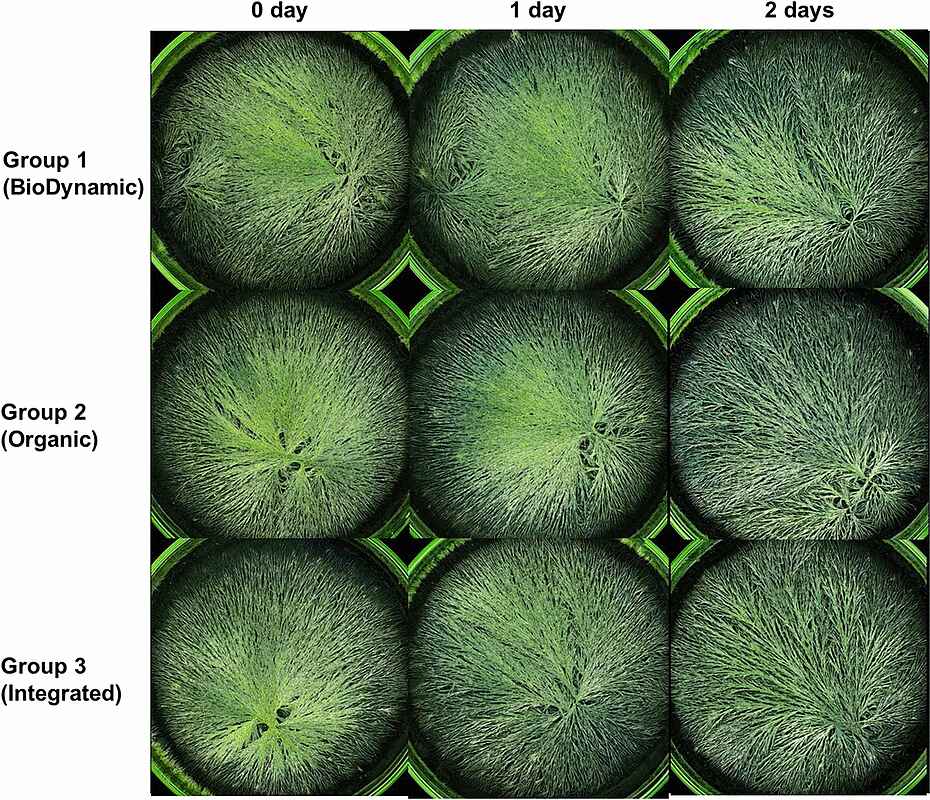
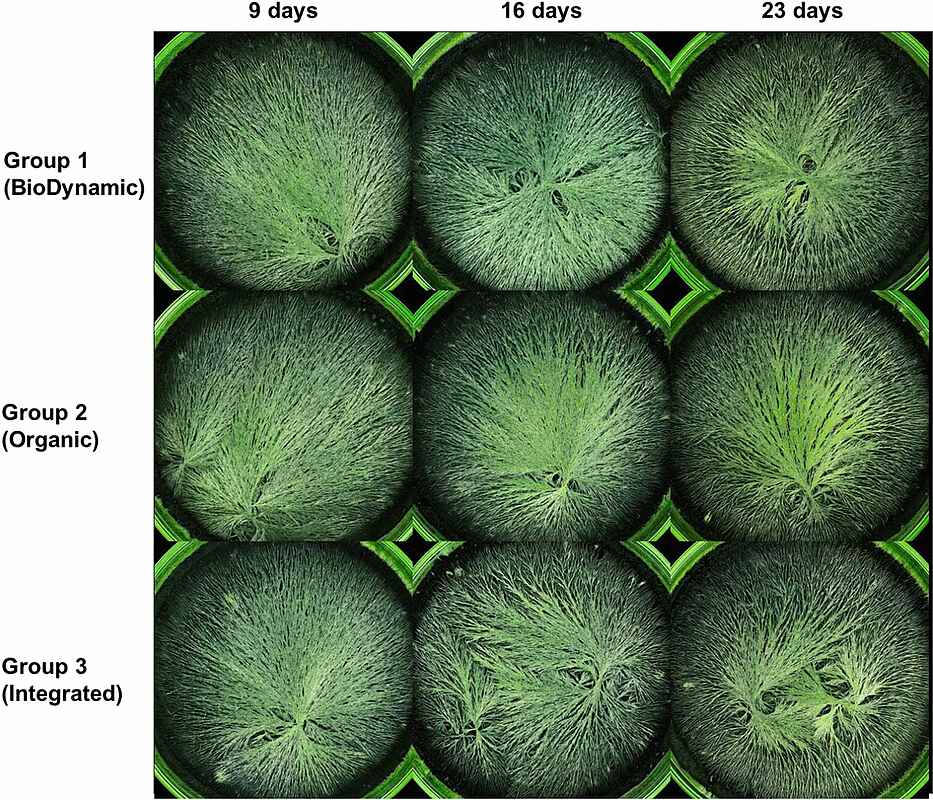

Figure 3: Crystallization images of wine samples from biodynamic ( top row), organic (middle row), and integrated (bottom row) agriculture. The samples were stored at 20°C and photographed at irregular intervals (number of days above the images).
What are the critical aspects of this study?
Overall, the study results suggest that biodynamic and organic farming systems can have a positive effect on wine quality and ageing. However, the significance of the study is limited by the small sample size (nine wine samples from one vintage). In addition, the evaluation of the imaging techniques is a subjective visual interpretation, which can lead to distorted results despite careful training. Furthermore, it was not comprehensively examined whether causes other than differences in cultivation could have led to the observed results.
Comment
For me, the value of this study lies in its attempt to open up further perspectives for observing something as subjective as the taste and quality of wine. In addition, copper chloride crystallization shows promising results for the aging of different samples. Chemical analyses are essential, especially when it comes to detecting contaminants. However, their precision does not always capture the most relevant characteristics when it comes to the taste of wine. Imaging methods can become a profitable tool in the quality analysis of wine and other foods.
Sources and further links related to this article
- Original study:
Fritz, J., Döring, J., Athmann, M., Meissner, G., Kauer, R., Schultz, H. R. Wine quality under integrated, organic and biodynamic management using image-forming methods and sensory analysis. Chem. Biol. Technol. Agric. 8, 62 (2021).https://doi.org/10.1186/s40538-021-00261-4 - Study report on the follow-up study by Fritz et al. «Distinguishing between different agricultural practices using crystallisation patterns»
- Study report «An update on image forming methods»
- The study is covered by Creative Commons (link to license) and has been summarized for this study report.