• News
  • Eventos
    • Eventos
    • Ofertas en línea
    • Congreso de Agricultura
    • Goetheanum.tv
    •  
    • Eventos pasados
    •  
    • Eventos Externos
  • Áreas de trabajo
    • Departamento de Alimentación
    • Asesoría
    • Formación
    • Investigación
    • Sustainable Development
    • Agroforestry
    • Consejo de Economía
    • Preparados
    • Living Farms
    • Semillas
    • Animal husbandry
    • Curso de Agricultura
    • Tema del año
    • Grupos profesionales
    • Viticultura Biodinámica
    • Producción de frutas
    • Hierbas y Plantas Medicinales
    • Proyecto Paisaje
    • Abejas
    • Cultivo del olivo
  • Publicaciones
    • Libros
    • Podcast
    • Magazine
    • Documentación de las jornadas
    • Reporte de Actividades
    • Circular
    • Más información
    • Agricultura biodinámica
  • ¿Quiénes somos?
    • Contacto
    • Team
    • Visión y Misión
    • Partners / Networks
    • Más información en
    • Prensa / Comunicados de prensa
    • The Glashaus (Glasshouse)
    • Newsletter
    • Apoyar a la Sección
  • Buscar en
  • DE EN FR ES

Búsqueda de texto completo

 
  1. Sección de Agricultura
  2. ¿Quiénes somos?
  3. Prensa / Comunicados de prensa

Diversity strengthens the earth and human beings

Creado por Sebastian Jüngel | 30.09.2025 |   Press
On the occasion of World Food Day 2025 nutritionist Jasmin Peschke emphasizes the importance of healthy food systems

Fertile soils with a diverse microbiome are an essential prerequisite for providing people with healthy and nurturing food. In promoting and enabling sustainable food systems, biodynamic farming supports the cause of World Food Day on 16 October 2025 which has the theme ‘Hand in Hand for Better Food and a Better Future.’

Jasmin Peschke, head of Nutrition in the Section for Agriculture at the Goetheanum says that “Rice, sweetcorn and wheat provide more than 50 percent of people‘s calorie intake worldwide.” While this sounds like a solid basic supply, the nutritionist points out that “these three grains are largely grown in large-scale monocultures with high pesticide use. The lack of diversity jeopardizes the resilience of food systems and soils – and consequently human health.”

She argues that “reducing cultivation to a few crops depletes the soil and decreases biodiversity and therefore food quality. If people‘s diet also lacks diversity, their health is at risk. While there is a wide range of foods, most of them contain additives, which in turn are made from these three types of grain.”

Working sustainably without the use of synthetic chemical fertilizers and pesticides contributes to preserving and fostering diverse soil life. In practising this, biodynamic agriculture promotes humus formation and biodiversity in and above the soil. “If the soil microbiome is diverse, the food also contains a rich bacterial flora with hardly any pathogens – in contrast to conventionally produced products,” says Jasmin Peschke and refers to studies such as that by Birgit Wassermann et al (2019). This quality continues through food intake, since the human gut microbiome is stimulated in a way that promotes human immunity and health.

Jasmin Peschke sees biodynamic food systems, from cultivation and processing to social integration, as a solution to the concern expressed by the UN Food and Agriculture Organization‘s World Food Day 2025 which has the theme ‘Hand in Hand for Better Food and a Better Future.’ Peschke sees this as an urgent requirement since people are not eating well. The number of starving people, she says, rises as steadily as that of people who overeat and she is convinced that “food can be the bridge to human health and to agriculture.”

English by Margot M. Saar

Study An Apple a Day: Which Bacteria Do We Eat With Organic and Conventional Apples? by Birgit Wassermann, Henry Müller and Gabriele Berg Web
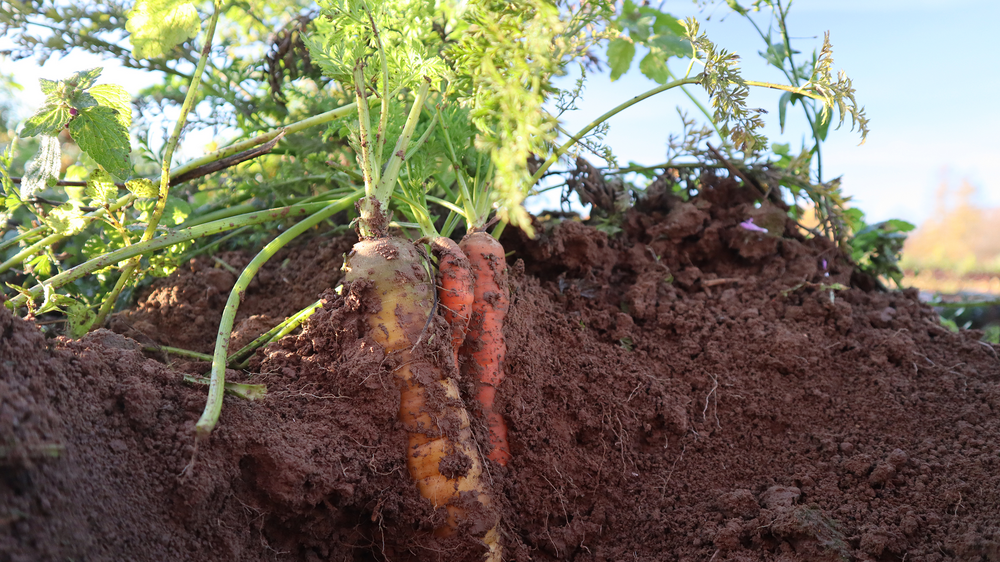
 

Foto: Simone Helmle
Volver

Sección de Agricultura

Goetheanum
Hügelweg 59
4143 Dornach/Suiza
+41 61 706 42 12
agriculturenoSpam@goetheanum.ch

Goetheanum

  • Goetheanum

Eventos

  • Eventos
  • Ofertas en línea
  • Congreso de Agricultura
  • Goetheanum.tv
  • Eventos pasados
  • Eventos Externos

News

  • News

Publicaciones

  • Libros
  • Podcast
  • Magazine
  • Documentación de las jornadas
  • Reporte de Actividades
  • Circular
  • Agricultura biodinámica

¿Quiénes somos?

  • Contacto
  • Team
  • Visión y Misión
  • Partners / Networks
  • Prensa / Comunicados de prensa
  • The Glashaus (Glasshouse)
  • Newsletter
  • Apoyar a la Sección

Áreas de trabajo

  • Departamento de Alimentación
  • Asesoría
  • Formación
  • Investigación
  • Sustainable Development
  • Agroforestry
  • Consejo de Economía
  • Preparados
  • Living Farms
  • Semillas
  • Animal husbandry
  • Curso de Agricultura
  • Tema del año
  • Viticultura Biodinámica
  • Producción de frutas
  • Hierbas y Plantas Medicinales
  • Proyecto Paisaje
  • Abejas
  • Cultivo del olivo

© Copyright 2026 Sociedad Antroposófica General. Todos los derechos reservados.

Huella

Huella

Allgemeine Anthroposophische Gesellschaft

Rüttiweg 45
4143 Dornach/Schweiz
Tel. +41 61 706 42 42
Fax +41 61 706 43 14
sekretariatnoSpam@goetheanum.ch
UID: CHE-103.601.774

Webmaster
webmasternoSpam@goetheanum.ch

Concepción, diseño e implementación técnica así como soporte y hosting
PIXELPETER GmbH
Rüttiweg 56
4143 Dornach/Schweiz
www.pixelpeter.ch