Previous studies have already shown that biodynamic practices may be associated with changes in the chemical and biological properties of soils, as well as with effects on composting processes. However, the origin of these effects remains a subject of debate: are they due to the overall management of the agricultural system or to the specific action of certain preparations?
In this context, the authors pose the following question: Do biodynamic preparations possess a direct biostimulant capacity for microbial activity related to composting and humification processes?
Description of the Experimental Design
The study focuses on the main preparations used in biodynamic composting (502 through 507), as well as preparations 500 (horn manure) and 500K.
The experimental approach is based on two complementary strands. First, a physicochemical characterization of the preparations was conducted to assess their composition and degree of biological transformation (C/N ratio, phenolic compounds, antioxidant activity, and organic matter structure). Second, biological tests were conducted to measure the ability of biodynamic preparations to stimulate the proliferation of microorganisms involved in the decomposition of organic matter and composting. Specifically, three types of compost were produced and compared: 1) green waste compost, 2) manure compost, and 3) mixed compost. Half of the compost piles received the biodynamic preparations and the other half did not (3 replicates for each type of mixture). The mixtures were then composted in 10-liter plastic pots kept in a chamber at 25°C. The piles were turned every two days, and samples were collected at 30, 60, and 120 days for microbial analysis.
(Bio)stimulating Results
1. Chemically Distinct Preparations
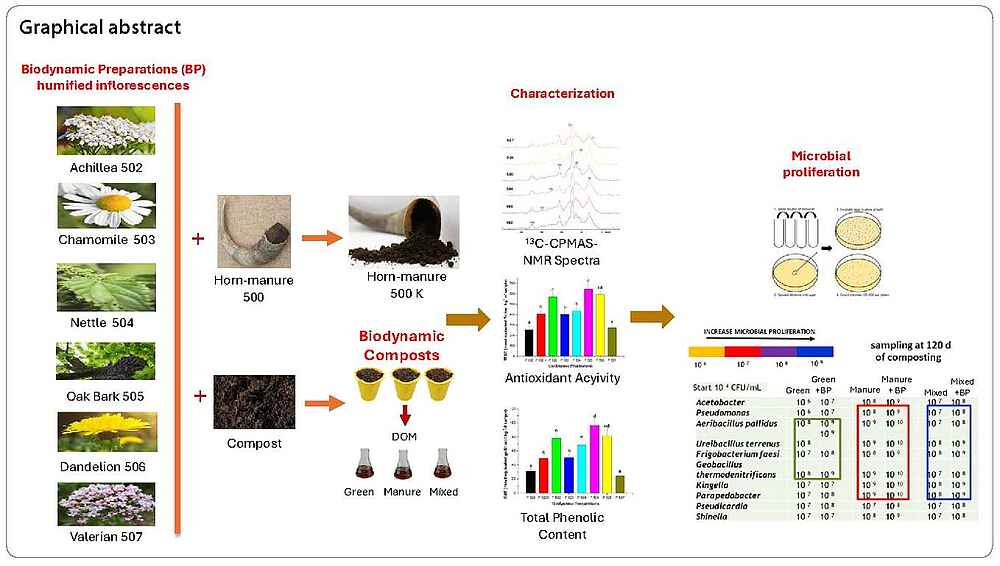
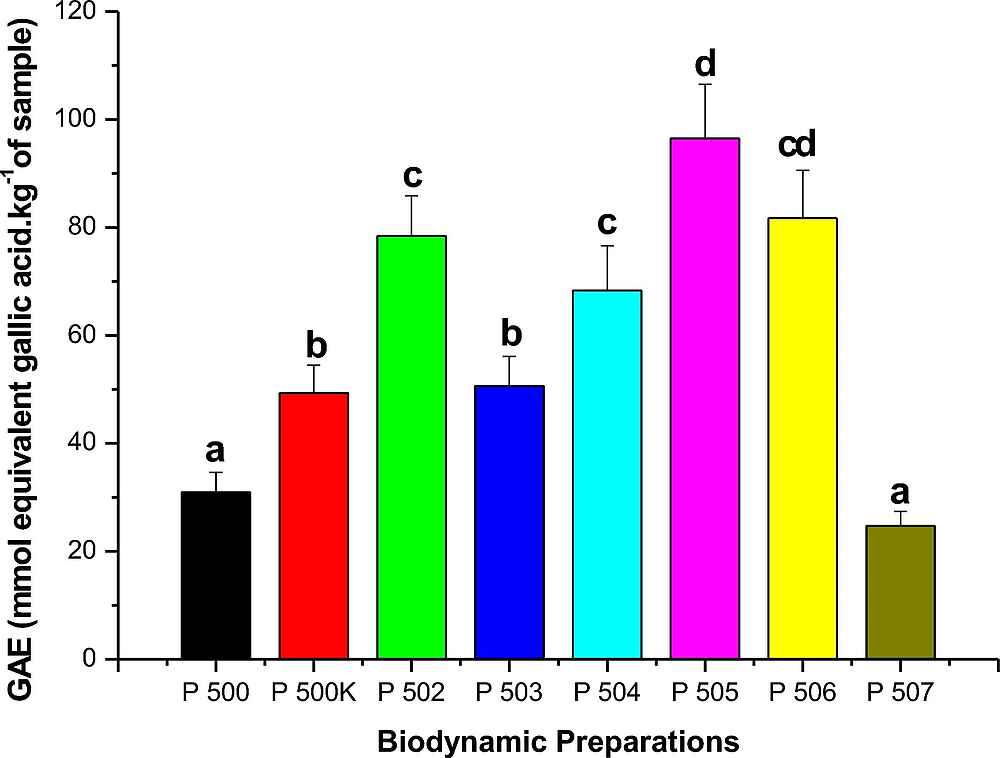
One of the first striking findings is the chemical heterogeneity of the biodynamic preparations. Each exhibits a specific signature linked to its raw material and method of preparation (Fig. 1).
Preparation 500: A Highly Transformed Material
Horn manure (500) is characterized by a high degree of transformation of the organic matter. Analyses show a relatively stabilized structure, with a significant proportion of humified compounds. It also has a notable content of phenolic compounds, associated with high antioxidant activity, which acts as a biostimulant for soil life and plants. This bioactivity is therefore more closely linked to abiotic, hormone-like (auxin-like) stimulation than to its own microbiological activity, which is low compared to the other preparations.
Preparations 502 through 507: Very Different Profiles Depending on the Plant
Compost preparations also exhibit contrasting behaviors.
Yarrow (502) and chamomile (503) have relatively balanced profiles, with intermediate levels of phenolic compounds and moderate antioxidant activity.
Stinging nettle (504) stands out for its higher content of nitrogenous compounds and potentially higher biological activity.
Oak bark (505), on the other hand, exhibits a more “structuring” profile, with more stable compounds and a high concentration of complex molecules.
Dandelion (506) appears to be an intermediate preparation, with more diffuse characteristics.
Valerian (507) stands out for its distinctive biological activity, often associated in the literature with enzymatic or catalytic effects in the compost.
These results confirm that preparations 502–507 contribute different “biological signatures” to the compost.
Preparation 500K: A More Active Combination
Preparation 500K, which combines 500 with the six compost preparations, occupies a unique position.
Analyses show that it combines the characteristics of 500 with increased chemical diversity linked to the plant-based preparations. In particular, it exhibits high antioxidant activity, a wealth of diverse organic compounds, and a more heterogeneous overall structure.
According to the authors, this combination could explain why 500K shows more pronounced effects than 500 alone in certain biological tests.
2. Effects on Microbial Proliferation in Compost
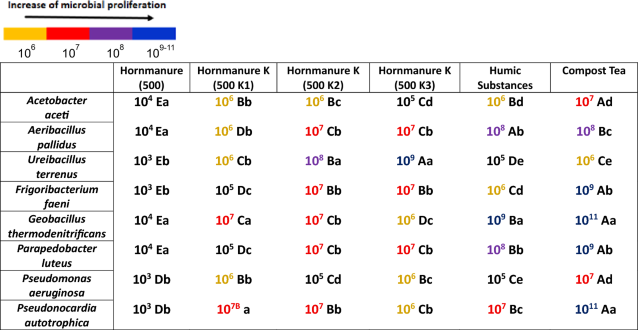
Biological tests show that several biodynamic preparations are effective in stimulating the growth of microorganisms involved in the decomposition of organic matter. This effect varies depending on the preparations and the species of microorganisms tested (Fig. 2).
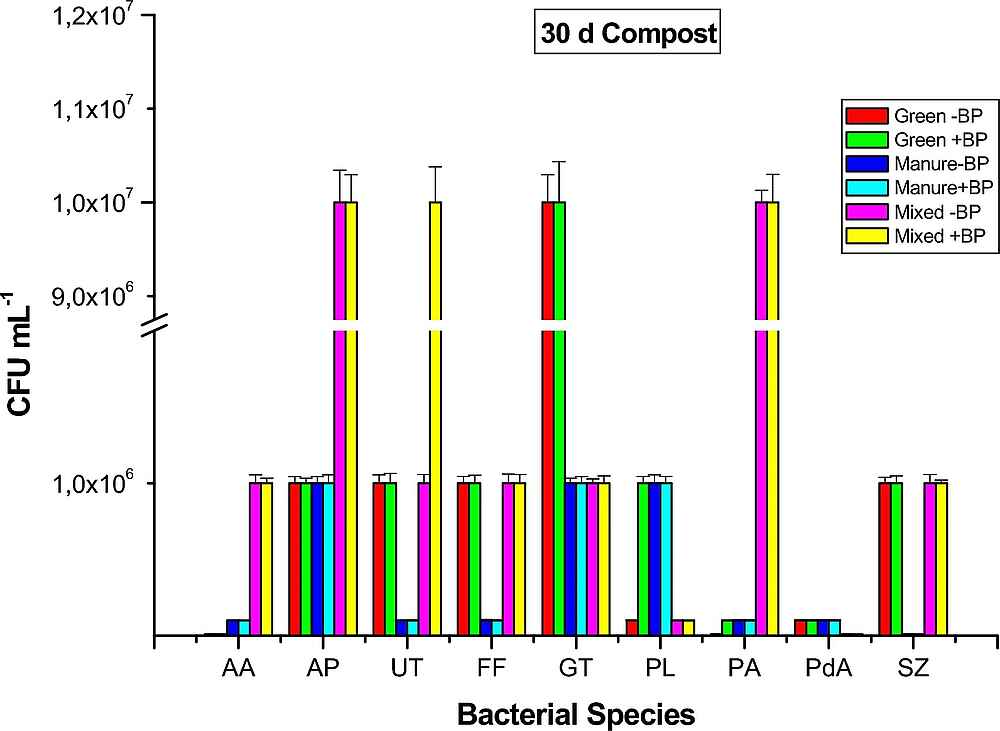
Now what happens in composts treated with biodynamic preparations? How do they respond from a microbiological perspective? The results show that composts treated with biodynamic preparations exhibit significantly higher biological activity as early as day 30 for certain bacterial strains (Fig. 3).
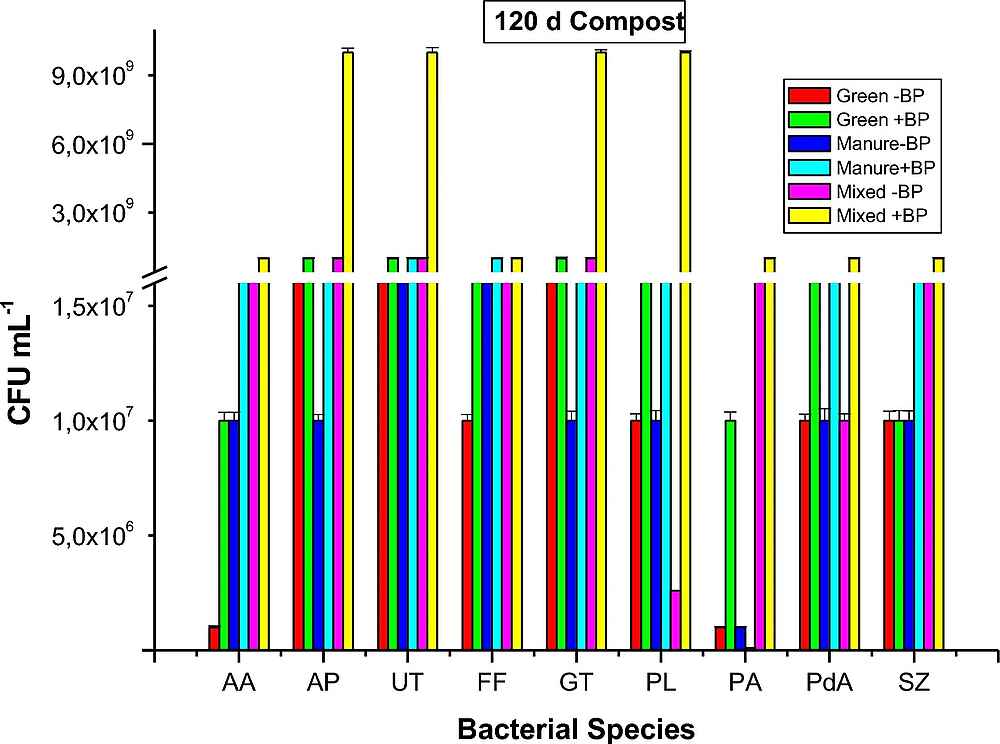
This trend increases sharply for nearly all strains once the composts have reached maturity (after 120 days), in comparison with the untreated composts (Fig. 4). Even more striking results were obtained with the liquid extracts (compost teas) made from the various composts.
Conclusion
This study highlights the chemical diversity of biodynamic preparations as well as their potential ability to stimulate microbial activity in composting systems. While it does not definitively conclude on their mechanisms of action in the field, it provides experimental evidence suggesting that these preparations play an active role in guiding the processes of humification and organic matter transformation.
Consequently, this study indicates that products prepared according to Steiner’s method (1924) through natural biotechnological humification do indeed have a significant effect on bacterial growth, as do composts treated with these preparations, which fully justifies their use in organic and biodynamic agriculture.
Link to the original article: Piccolo, A., Drosos, M. & Cozzolino, V. Microbial proliferation activity of biodynamic preparations and biodynamic compost. Chem. Biol. Technol. Agric.13, 44 (2026). https://doi.org/10.1186/s40538-025-00891-y
Alessandro Piccolo is also the founder of the Italian Society for Biodynamic Sciences.